


Private capital loves the Indian consumer. It shows up on deal charts every week. But where are the proof points that all this capital is actually creating value? This week, a big one showed up. Read about why investing in pureplay consumer businesses is inescapable in a India-specific strategy. Also, all the deals that made noise during the week in Edition #20.
Lede
Vishal Mega Mart to Basil, a Market for Every Cheque Size

What does a startup that makes bento lunch boxes for kids have in common with a value retailer operating at scale?
A consumer market that spells compelling opportunities for entrepreneurial innovation and, increasingly, supernormal returns for private capital.
Let’s unpack that.
On Friday, Samayat Services, a special purpose vehicle owned by Kedaara Capital and Partners Group, sold a 14% stake in value retailer Vishal Mega Mart for Rs 7,635 crore (approximately $838 million) via open market transactions . It was the second major block sale since the company’s IPO in December 2024. The first, in June last year, fetched Rs 10,220 crore (approximately $1.2 billion at prevailing exchange rates). Together, the two tranches have returned close to Rs 18,000 crore (over $2 billion) in profits on a $735 million investment made by the two private equity (PE) firms about eight years ago.
Earlier in the week, Basil, a Bengaluru-based startup that designs and manufactures products for school-going kids, raised a $2 million pre-Series A round led by Prime Venture Partners – the technology-focused venture capital firm’s first bet on a pureplay consumer brand.
“The Basil investment came out of Fund V, which closed in June last year. We expect to do 3-4 consumer brand investments from this fund,” Prime managing partner Brij Bhushan told The Runway.
The two developments capture the opportunity arc for private capital in India’s consumer markets. More and more global capital is also paying attention. Specialist early stage consumer investor Sauce VC just raised a Rs 750 crore ‘opportunities’ fund to write larger cheques for winners in its portfolio. Notably, 80% of the capital came from global limited partners – a first for the firm. “This is a testament to the unparalleled opportunity our consumer sector offers,” Sauce VC managing partner Manu Chandra said in a social media post.
Big profits and new believers
Vishal Mega Mart speaks to an exit quality that was once associated almost exclusively with financial services or technology investments. Across the investment cycle, consumer bets have started to deliver outsized returns for private capital investors.
When ChrysCapital acquired a controlling stake in Mumbai-based patisserie chain Theobroma last July for a reported Rs 2,000-2,400 crore, it created an exit for ICICI Venture, which had invested about $20 million over two tranches since 2017 for a 42% stake.
The deal was also an important milestone in ChrysCapital’s relatively recent consumer strategy.
“Consumers are trading up for better quality, safety and experiences. That journey is just starting. If you look at the next 10-15 years, that’s our key bet,” Rajiv Batra, who leads consumer investments for the firm, told The Runway in an earlier interview.
Among other notable exits, Fireside Ventures harvested sizeable profits from its Rs 29 crore investment in Mamaearth, following the D2C skincare brand’s IPO in 2023. The public markets have been a more exacting judge of the valuations of new age consumer businesses. Mamaearth parent Honasa Consumer commanded a market capitalisation of over Rs 10,000 crore at listing but has slipped significantly since then. Fireside continues to hold a minority position in the company.
That said, amidst the excitement over AI and deeptech, validation for the consumer thesis is expanding. At the mature end of the spectrum, the bets are getting bigger and bolder. General Atlantic’s acquisition of a 7% stake in packaged snack maker Balaji Wafers at a valuation of $3.8 billion and Temasek Holdings paying a reported $1 billion for a 10% stake in Haldiram’s are recent examples.
Then there are the new believers at the early stage end of the spectrum who want to introduce disruptive models in traditional markets. In backing Basil, Prime Venture Partners steps out of its comfort zone. “We have done a lot of consumer investments. For example, MyGate… we seeded that company. But what we had not done was consumer brands,” Bhushan said. Basil is everything that would usually not be associated with the venture capital firm. The company sells things that you hold in your hands – steel bento lunch boxes, insulated food jars, and soon, backpacks.
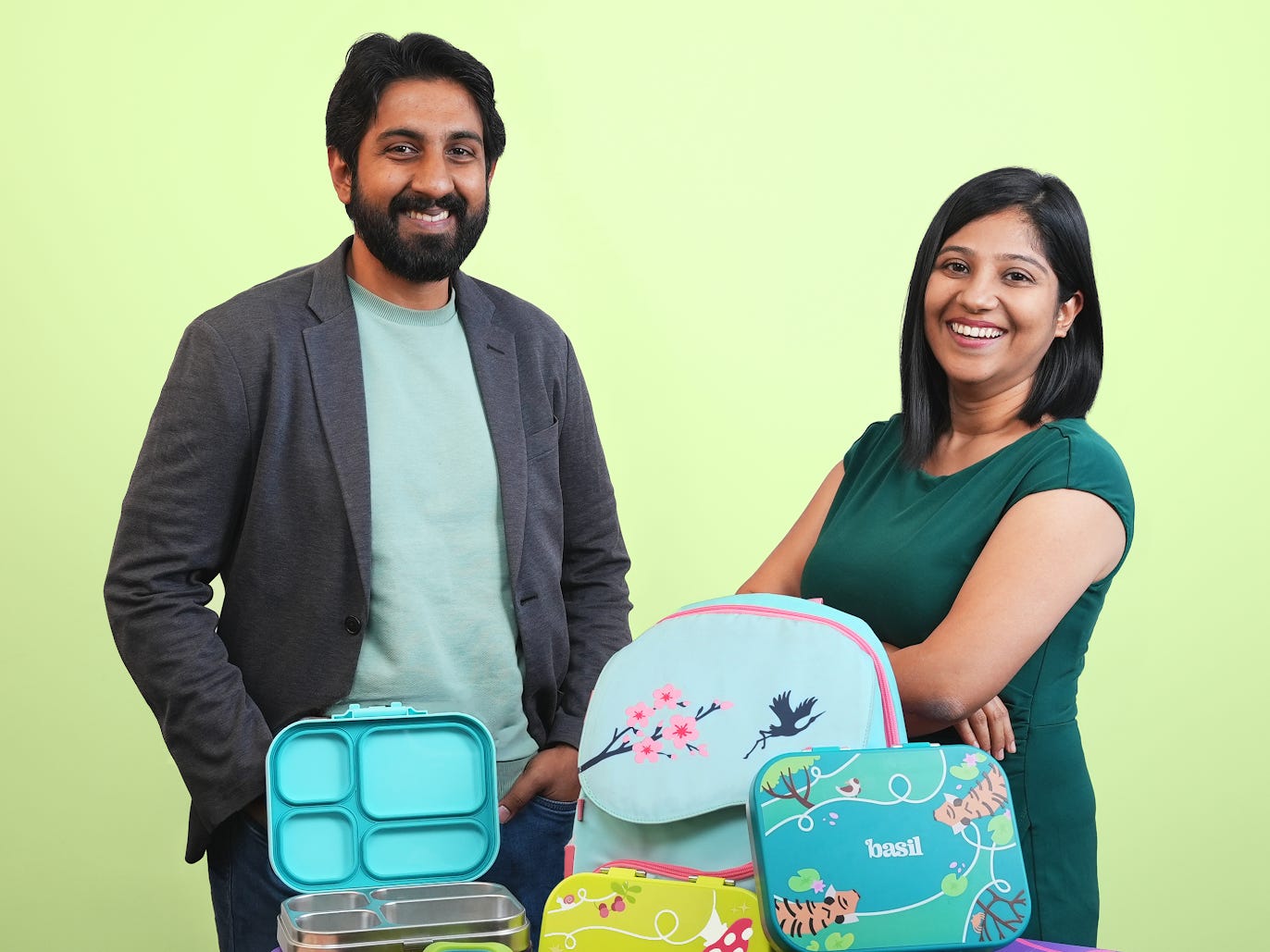
What appealed to Bhushan was the potential for a platform play. “We didn’t want to invest in just another brand but something that could be larger than the first product they build,” he said. Basil’s founders – Harini Rajagopalan and Mahesh Muraleedharan, both veterans of the early consumer internet wave – started the company after discovering that there was no well-designed and durable lunch box for school-going children in India. The canvas has since expanded.
“We happened to start off with lunch boxes but we have a much bigger play in terms of being the ultimate destination for all things kids… at every touchpoint in a child’s day-to-day life,” said Muraleedharan.
Prime is not the first technology-focused venture capital firm in India to broaden its focus to consumer businesses. Nexus Venture Partners is an investor in coffee chain Ab Coffee and sneaker brand Comet. Peak XV backed lab-grown diamond brand Aukera last year and luggage brand Mokobara before that. Stellaris Venture Partners has Mamaearth and vegan lifestyle brand Zouk in its portfolio.
Fragmented markets, poised for innovation
Capital, whether global or local, finding its way to protein bars, coffee, apparel, personal care and packaged food, is a reflection of India’s consumer markets now being more visible than before.
Private consumption skyrocketed from $1 trillion in 2013 to $2.1 trillion in 2024, according to a Deloitte India and Retailers Association of India report. The country is projected to become the world’s second largest consumer market after China by 2030.
An equally compelling factor is that the consumer market here remains largely fragmented and unorganised. In a market this heterogeneous — different income layers, different geographies, different aspirations, under penetrated across categories — private capital-fuelled innovation has the potential to find a footing at every stage.
The Week in Deals
Payments, Defence-Tech and a Brain-Monitoring Wearable
Strategic late stage exits and a steady flow of early stage investments marked dealmaking this week. From defence-tech and creator commerce to SME lending and wearables, investors put money to work across a broad spectrum. A notable secondary transaction kept the liquidity momentum going.
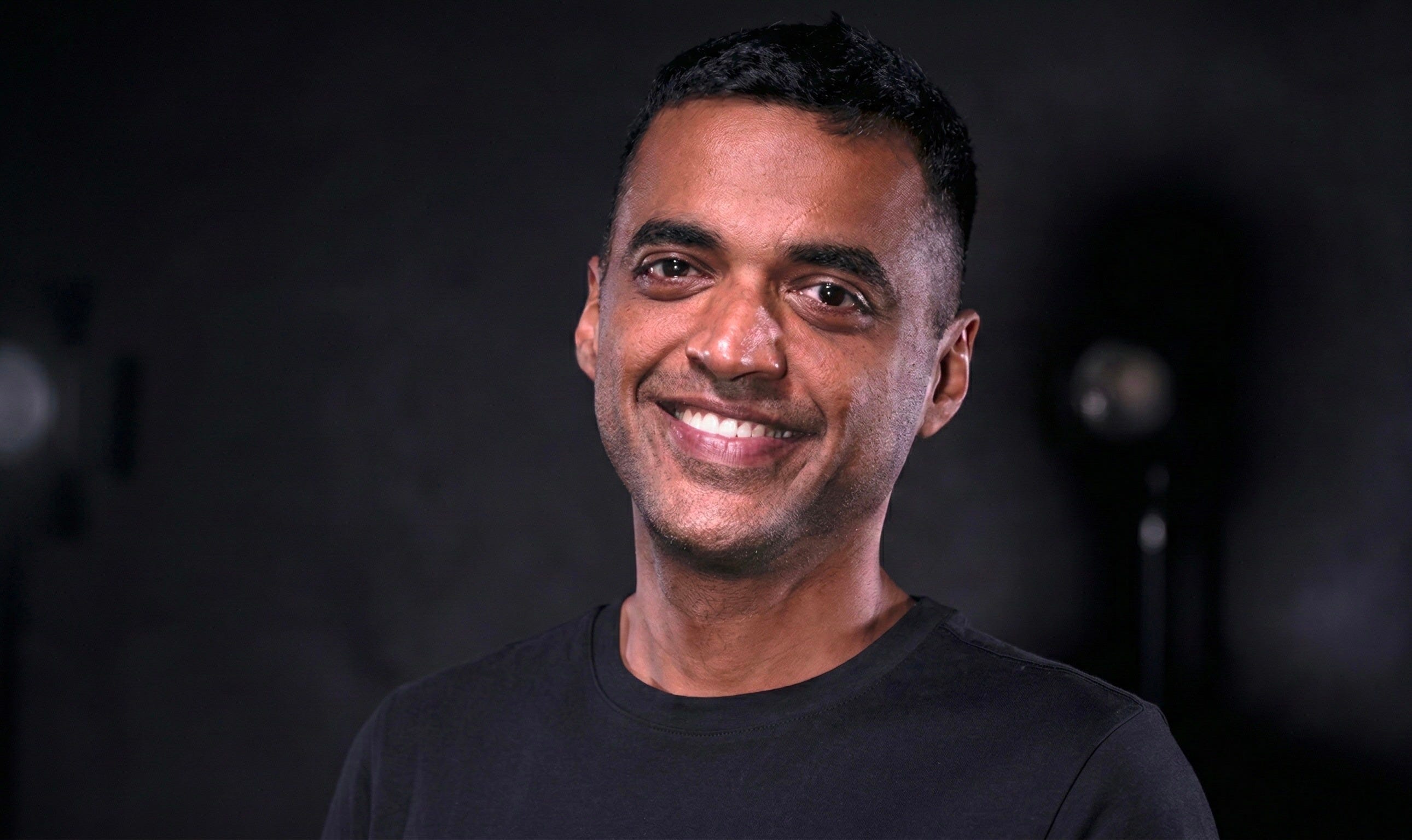
Temple, Zomato founder Deepinder Goyal’s wearables venture, raised $54 million in its first funding round, valuing the company at $190 million.
“More than 30 Temple employees participated in the round, at par valuation,” Goyal said in a social media post. Dubbing it a “friends and family” round, he said investors were founder friends or early Zomato backers.
Temple is a device that claims to be able to monitor blood flow to the brain. Goyal stepped down as CEO of Zomato parent Eternal earlier this month to focus on building Temple and other ventures.
Quest Global raised an undisclosed sum in primary and secondary capital from Hillhouse Investment, which picked up a minority stake in the company. The deal created exits for some of the Singapore-based engineering services company’s existing backers. The financial details of the transaction were not disclosed.
Among existing backers, ChrysCapital and True North were part of an investor group that invested $150 million in the company in 2021. The Carlyle Group entered the company in 2023.
The company is looking to go public in India in the next 12 to 18 months, co-founder and CEO Ajit Prabhu told Reuters this week.
The company originally also had an aerospace components manufacturing arm in India called Quest Global Manufacturing which was spun out in 2014. The spin-off, rebranded as Aequs, went public last year.
Constelli raised $20 million in a Series A round led by General Catalyst. 360 One Asset and existing investor Pravega Ventures joined the round. The Series A round comes about a year after the Hyderabad based defence-tech startup raised a $3 million pre-Series A led by Pravega.
Prayaan Capital, a Chennai based digital lending platform for small and medium enterprises, raised a $12 million Series A round led by Peak XV Partners.
Wishlink raised a $17.5 million Series B round led by Vertex Ventures SE Asia & India. Existing investors Elevation Capital and The Fundamentum Partnership joined the round. The round comes about two years after the Gurugram based creator commerce platform raised its Series A round.
Xflow raised $16.6 million in a Series A round led by existing investor General Catalyst. PayPal joined the round as a new investor. Other existing investors – Stripe, Square Peg, Lightspeed and Moore Capital – also participated. The Bengaluru based company enables cross-border payments for businesses.
Gushwork raised $9 million in a seed round led by Susquehanna Asia VC. Lightspeed, B Capital, Seaborne Capital, Beenext, Sparrow Capital and 2.2 Club participated in the round. The US and India (Bengaluru) based agentic AI company enables discovery for brands and businesses on AI search engines.
Spintly raised $8 million in a Series A round led by Accel. Enrission India Capital, SucSeed Ventures, Alumni Ventures and Chakra Growth Capital Fund participated in the round. The Goa-based startup offers IoT based security solutions for offices and homes.
Home Essentials, a Gwalior based omnichannel retailer for kitchen and home products, raised $7.7 million in a pre-Series B round led by 360 One Asset. India Quotient was a returning investor in the round.
Freed, a debt relief platform, raised $6.6 million in a Series A2 round led by Aavishkaar Capital. Existing investors Sorin Investments, Piper Serica and Sattva Ventures participated in the round. The Gurugram-based company operates a technology-led platform to enable over-leveraged borrowers resolve unsecured debt.
Wootzwork, a Gurugram-based startup that provides advanced engineering and manufacturing services to OEMs, raised $6.6 million in a Series A round led by existing investor Z47. Nexus Venture Partners, also an existing investor, Advantedge Founders and Stride Ventures participated in the round.
Sub-$5 million deals: Apparel brand MyDesignation raised $4.3 million in a Series A round led by RPSG Capital. Cancer care startup OnCare raised $4 million in a Series A round led by Sky Impact Capital. Medical equipment startup Pulse raised $4 million in a seed round led by 3one4 Capital. Robotics startup Armatrix raised $2.1 million in a pre-seed round led by Pi Ventures.
Note: This is not an exhaustive list of deals and is based on information available in the public domain including company filings, press releases and reports published by media outlets.
Submit a deal for the Briefing at hello@therunwaynews.com.
Thank you for reading The Runway. We’d love to get your feedback. Drop us a line.