



Edition #22. Rhoda AI, a Palo Alto, California-based industrial robotics startup, emerged from 18 months in stealth this week with a $450 million Series A. The lead investor wasn’t a Sand Hill Road venture capital firm. It was Bangalore-born Premji Invest, the family office of Wipro owner Azim Premji.
A group of US-based early stage investors joined the Series A round. The line-up included Capricorn Investment Group, Khosla Ventures, Matter Venture Partners, Mayfield, Prelude Ventures and Kleiner Perkins chairman John Doerr. The round also included Singapore’s Temasek and Xora, according to a statement.
The deal brought back a conversation with a venture capitalist from Bangalore some months ago. “I wouldn’t be surprised if the deal flow of some of the larger family offices is better than most traditional venture capital firms,” he remarked. This was around the time that quick commerce company Zepto scooped up $350 million from the families behind some of leading Indian corporations such as Mankind Pharma, RP Sanjiv Goenka Group and Haldiram’s, and Motilal Oswal’s private wealth division.
Family offices such as Premji Invest signal patient capital backed by operating experience that most traditional venture capital and private equity (VC-PE) firms would find hard to replicate. In India, their presence and influence has grown substantially in recent years both as limited partners in VC-PE funds and as direct investors in some of the country’s most sought-after private companies.
Even homegrown PE firm ChrysCapital opened up its latest fund to family offices, raising up to 15% of its mega $2.2 billion buyouts-focused Fund X from domestic family offices and other institutional investors. “We haven’t done this in our prior nine funds… A larger part of our overall pool of capital will come from domestic LPs for our next fund,” ChrysCapital partner Gaurav Ahuja, told Reuters in November.
Rhoda AI joins a sizeable global, primarily US-based, portfolio that Premji Invest has quietly assembled even as top-rung VC firms such as Peak XV Partners and Nexus Venture Partners draw attention for their own cross-border forays. The nearly 60 investments-strong portfolio includes design software company Canva, cap table management platform Carta, healthcare focused generative AI company Hippocratic AI, and stock trading platform Robinhood, among others.
Framing the Rhoda AI investment, Premji Invest managing partner Sandesh Patnam said, “We invest only when we believe a company has the potential to build a truly large, enduring business. We believe Rhoda has assembled the technical foundation, ambition and execution capability to achieve that goal.”
Rhoda AI is building a robot foundation model that harnesses existing internet videos to train robots for real-world environments in industries such as manufacturing and logistics.
Family offices like Premji Invest (it channels profits from such investments into philanthropic work), are ushering in structural shifts in India’s VC-PE market. The number of professionally managed family offices in India grew from 45 in 2018 to nearly 300 in 2024, according to PwC data cited in the June 2025 Julius Baer-EY ‘Indian Family Office Playbook’ report. Apart from real estate and private credit, the appetite for VC-PE investments among family offices is growing. Out of the 25-odd family offices surveyed for the report, more than half allocated up to 10% of their portfolio to the asset class while one-fourth allocated more than 20%.
Other longtime active homegrown family offices include Sharrp Ventures, the Marico founding family’s investment firm; Burman Family Holdings, from the family that owns Dabur; and Ronnie Screwvala’s Unilazer Ventures.
Over the years, their ambitions with respect to the role they play in the VC-PE arena have grown, both in terms of deal stages and geography. Many of them are pushing their way into growth and pre-IPO transactions, unencumbered by the structural constraints of traditional VC-PE firms. They are also increasingly writing cheques across borders and this will only expand with the acceleration of AI-led opportunities.
The Week in Deals
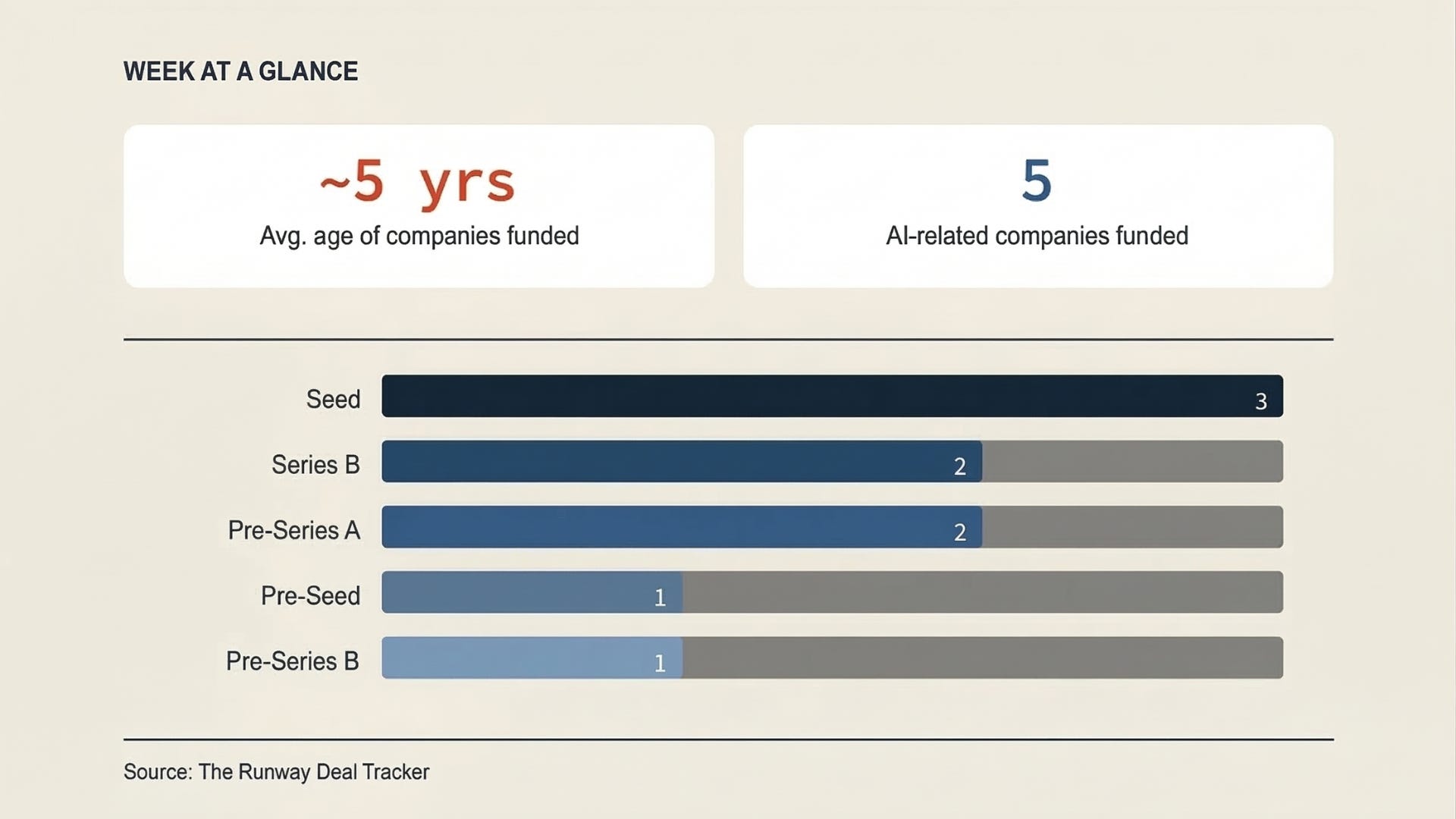
360 One Asset’s Wellness Bet; Non-Metro Startups Shine
Apart from Premji Invest, homegrown firms Peak XV Partners and Nexus Venture Partners also made moves overseas. Both doubled down on existing investments in their respective US portfolios. In India, early stage dealmaking wasn’t confined to the metros. Startups from Jaipur, Rajkot and Raipur picked up sizeable rounds from investors.
KAST raised a $80 million Series A led by QED Investors and Left Lane Capital. Peak XV Partners, which co-led the Singapore-based startup’s $10 million seed round in 2024, joined the round. HSG and DST Global Partners also participated in the round. KAST is a fintech platform that enables users to store and spend stablecoins.
Gumloop, a platform that enables non-technical teams to build their own AI agents, raised a $50 million Series B round led by Benchmark.
Nexus Venture Partners, which led Gumloop’s $17 million Series A last year, participated in the latest round alongside several others.
The San Francisco-based company is part of Nexus’s growing US portfolio, which now numbers close to 80. The firm has been ramping up bets in North America, especially focused on AI, over the past few years. It continues to be a prolific investor in India as well as in technology companies in the US-India corridor.
Mosaic Wellness raised Rs 200 crore ($21.6) million in a new round of funding from 360 One Asset. The round includes a secondary component, creating a partial exit for early backer Spring Marketing Capital.
As Mosaic builds toward its eventual journey to public markets, its shareholder base is evolving towards long-term oriented investors,” 360 One Asset said in a statement.
The Thane-based company retails digital-first wellness brands across categories such as hair, fitness and nutrition. Its other early backers include Peak XV Partners, Elevation Capital and Z47.
Skye Air Mobility raised a $9 million Series B round led by IAN Alpha Fund. AVNM Ventures, Faad Capital and Bajaj Capital, among others, participated in the round. The Gurugram-based startup is building hyperlocal drone delivery networks using autonomous drones and ground-based delivery infrastructure. India’s last-mile logistics market is projected to grow to $10 billion by 2030 from an estimated $5.5 billion now, the company said in a statement.
AquaExchange raised $8 million in a Series B round led by existing investor Endiya Partners and Factor Analytics. Accion Ventures and Ocean 14 Capital were also returning investors in the round. The Bhimavaram, Andhra Pradesh-based company offers an IoT and AI/ML powered technology platform to help shrimp and fish farmers with procurement, farm monitoring and market access.
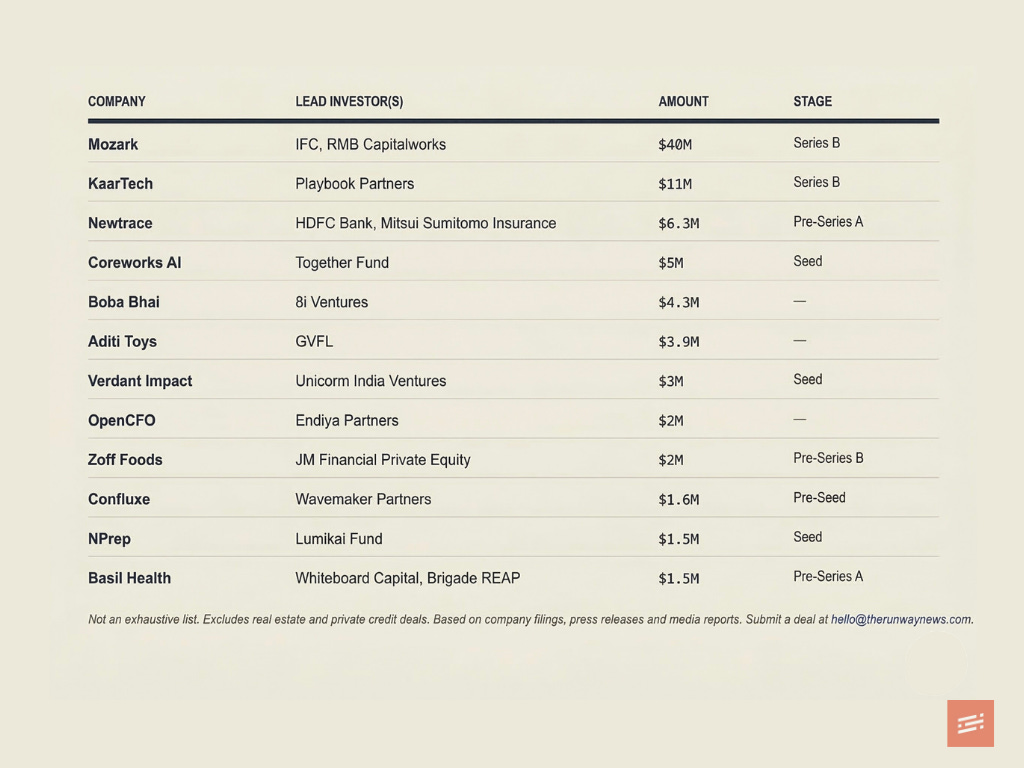
Other deals this week:
Geopolitical tensions in West Asia continue to cast a shadow on dealmaking, especially in the later stages and the IPO-led exit market.
In some welcome news, though, the National Investment and Infrastructure Fund Limited (NIIF), India’s sovereign-anchored alternative asset manager, secured commitments worth $750 million for its Private Markets Fund II (PMF II). Commitments came from Asian Infrastructure Investment Bank, the New Development Bank and Japanese institutional investors. The fund has a final target of $1 billion and will invest across themes such as energy transition, healthcare, manufacturing, technology and financial inclusion.
Recco | Notes on Culture, Craft and the Considered Life
A Record Japanese Whisky Auction — With an Indian Connection

Karuizawa Distillery has long occupied near-mythical territory among whisky collectors, and earlier this week it produced another headline. At a London auction hosted by Christie’s, two Karuizawa casks distilled in 1999, the final year before the famed Japanese distillery ceased production, sold for a combined £4.25 million (about ₹52 crore), setting a record for the highest-value lots ever sold by Christie’s wine and spirits department.
The casks came from the private collection of Sukhinder Singh, the British entrepreneur of Indian origin who built The Whisky Exchange into one of the world’s most influential whisky retailers before selling the business in 2022.
Singh now runs Elixir Distillers, which also owns the Portintruan distillery on Islay.
The eventual bottlings will be realised in collaboration with Dhavall Gandhi. Gandhi, who grew up in Valsad, is a former finance professional who chucked his career to learn whisky making in Scotland. He has been a whisky maker at The Macallan and the Lakes Distillery in England. In 2022, Gandhi set up Kandoblanc, an Edinburgh-based company, which acquires rare casks and turns them into limited, highly designed releases that treat whisky as both spirit and collectible object.
The sale is also a reminder that Indians are increasingly visible in the rarefied world of high-end whisky collecting and curation.
Recco is a column by Murali Menon. Murali has spent a career paying close attention to how things are made, where they come from, and why some of them endure. Every edition, one recommendation: a maker, an object, a place, a practice.
Thank you for reading The Runway. We’d love to get your feedback. Drop us a line at hello@therunwaynews.com or just reply to this email.