



Urban India is addicted to convenience. Delivered through apps. In minutes.
It started with ecommerce, food delivery, cabs and entertainment and has expanded to just about any product from everyday essentials and medicines to gold coins. Today, we’re savouring the era of services-on-demand. Rent skills by the hour. And, it’s only just starting to take off.
Services such as plumbing, small repairs and pest control have been available on-demand for a few years. Urban Company put all those services on an app and solved the problem of dealing with the inconsistencies of an unorganised mass of service providers. In the past couple of years, that proposition has been expanded quickly to what is now termed ‘home services’, notably domestic help services, on tap.
The prices are sometimes ridiculously low. I once paid Rs 26 an hour (as part of a package deal) on the Snabbit app to have one of their professionals come in and wash dishes, sweep, mop and do the laundry.
India’s largely unorganised home services market was estimated at $60 billion in FY2025 and is tipped to grow at 10-11% CAGR over the next five years. Apps such as Snabbit, Pronto and Urban Company’s InstaHelp accounted for less than 1% of that market (Source: RedSeer).
Fuelled by venture capital, these apps are sprinting to outdo each other on market share, typically through heavy discounts and slick marketing.
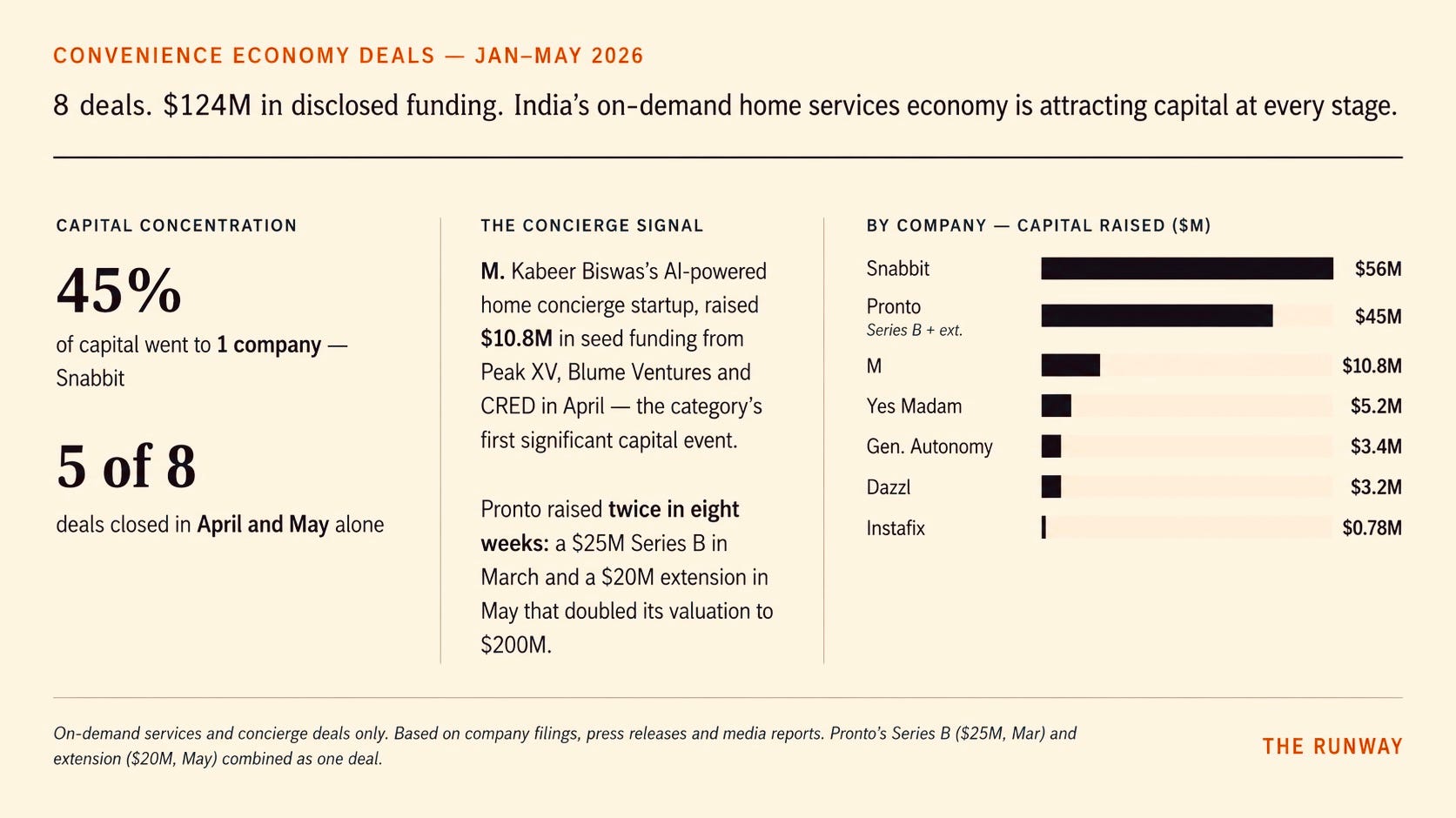
The universe of services on offer is expanding. From domestic help and salon-at-home to soon, even robots, the possibilities seem endless as long as capital remains interested in bankrolling the urban consumer’s next fix. What’s that going to be?
In Edition #35, guest writer Keshav Lohia says that the “habit of paying to delegate the mundane,” is leading up to having sophisticated concierge apps run your life. “From needs to wants,” as he puts it.
When I invited Lohia to pen an article on how he viewed the home services opportunity, Snabbit and Pronto had just seen significant valuation bumps on new funding rounds. During the writing of the article, news emerged about Pronto’s push to capture real-world home data for robotics training – the story broken by Entrackr.
Lohia argues that the real asset being built is not market share but data – and the gap between what these platforms charge today for services and what they need to charge to survive is being quietly closed by something users did not sign up for.
A bit about Keshav Lohia. Home is Jodhpur in Rajasthan. He’s currently an early stage investor based in New York. He previously invested in consumer-tech startups at Kalaari Capital and was a product leader at Zomato. He is fascinated by how technology reshapes everyday consumer behaviour and writes about the businesses, technologies, and cultural shifts changing the way we live and work in his newsletter, Tech & Tonic. Give it a read. It’s what encouraged me to reach out to him.
His article is part of The Runway’s series of contributed essays, designed to curate and share insights and lived experiences from stakeholders in India’s private capital investment ecosystem. You could be an upcoming fund manager developing a thesis or marking patterns, an angel investor who’s seeing distinct shifts in specific market segments, a founder who’s building, a subject matter expert, or an independent writer who enjoys chasing a good story — write to me at snigdha@therunwaynews.com. I’d love to brainstorm with you on turning ideas into essays.
Now, dive into Lohia’s sharp and balanced take on where India’s home services market is headed.
From Groceries to Judgement
By Keshav Lohia

When I moved to New York in late 2024, I frequently joked to my mom that I missed Blinkit more than I missed her.
Such is the pull, retention and, may I say, dopamine hit of getting your groceries, that charging cable you forgot at the office, delivered to you in seven minutes, right at your doorstep.
In 2021, when the instant grocery segment was just kicking off, all the ‘experts’ were aligned on the fact that this is a money-losing business and it will never dislodge the ‘real’ grocery players. Quick commerce was meant to be a complementary product. But slowly, the catalogues of these players grew aggressively, the dark stores inched closer and closer to your home, and before we knew it, we were addicted to getting literally everything delivered in 10 minutes.
So, what’s changed today? We stand at a similar juncture in 2026, but this time, it’s not the products themselves, it’s about services.
Your maid didn’t show up in the morning? How will you pack your kids’ lunchbox while preparing for that important investor call and clean up the living room before your friends show up for dinner in the evening? Enter instant services. Open up a snappy looking app at 8AM, choose the earliest slot, pay less than $2 a hour and whoa an ‘expert’ shows up at your place before 9AM, ready to clean up your messy living room and help you organize your day.
Sounds perfect doesn’t it?
Upon returning to India for a couple of months in 2026, I could see the proliferation of ‘instant’ in all aspects of everyday life. The internet remained divided over labour laws but people kept using these apps to book house-help, dog walkers, bartenders, and even someone to help unpack their bags!
Very quickly, the second order effects of these apps became visible. Maids who would earlier work in three houses and earn Rs 5,000 per month from each job, were sitting comfortably in neighbourhood parks, waiting for the next request on their app, completing 4-5 such gigs for a fixed monthly pay of Rs. 18,000. The apps are a boon to urban professionals, who could pay often as little as Rs 150 an hour several times a month to solve daily, painful household chores. Everyone looks happy, right? The app has high retention, low churn, solves a critical pain-point for users, and the supply is plentiful and compensated, well-above market rates.
When does the music stop?
How we learned to delegate
Instant help as a concept has been around since the first wave of e-commerce. BookMyBai had raised a Series A round in 2017 along with others like MyChores and MyDidi. They started as part of the e-commerce boom and built up supply for ‘domestic-help-for-hire’ platforms but could never really scale.
So what changed in 2026? Three things:
Q-commerce has rewired expectations: Apps like Zepto and Blinkit have eliminated friction around delivery times and rewired the expectations of urban Indians. Need ice-cream and toys at the last moment for children of visiting guests? Order now and it will be delivered in nine minutes. At first, I thought this phenomenon would be limited to apartment complexes in metro cities and with 20-40 year olds who are crunched for time. But to my surprise, my mother in a tier 2 city in India places at least 1 Blinkit order every day, despite having a driver who could get the same items in similar time.
Opportunity cost thinking: Urban professionals now think in terms of opportunity cost. Rs. 150 per hour for household work is rational, not lazy. If you can use the same one hour that you would spend cleaning the house to improve that presentation or complete a home workout, you will be far better off in your life. Why not pay someone Rs.150 (4x a week) to take it off your plate? Surely, your time is more valuable than the cheap labour cost subsidized.
The market was always there: India’s home services market was estimated at $60 billion in FY2025 and is tipped to grow at 10-11% CAGR through FY2030, according to RedSeer. Online penetration stood at less than 1% of net transaction value but is projected to grow at a CAGR of 18-22% through FY2030. A sizeable portion of monthly household budgets is spent on cooks, maids, drivers and other service providers. In 2026, venture capital dollars collided with organized supply and the behavioural readiness of the urban consumer to create the perfect storm. The previous attempts like Housejoy and BookmyBai failed on infrastructure, not demand.
This small market has been on a tear in recent months, attracting massive investor interest. In the month of April, these apps clocked 3 million bookings, up from 2 million in February. The newest entrant, Pronto, scaled from 1,000 daily bookings in December to 25,000 in April and its valuation doubled in weeks.
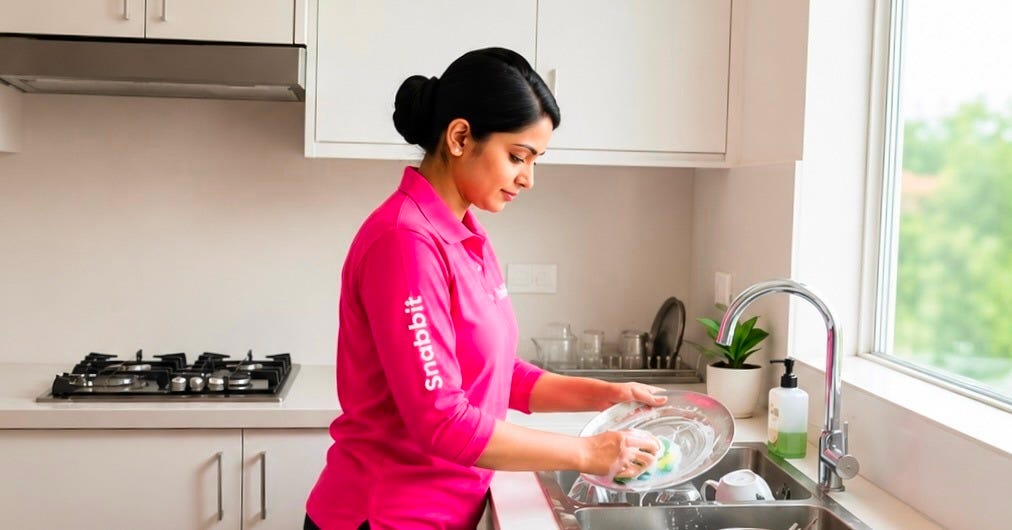
Snabbit, an early mover started by ex-Zepto executive Ayush Agarwal, has raised $112 million so far and its valuation is at close to $400 million. Urban Company, the listed and incumbent home services player, grew Instahelp from near zero to 2.7 million orders in one quarter.
This is where a generation learned the habit of paying to delegate the mundane. And a handful of players are burning a combined $10-$12 million every month to capture the largest share of these wallets.
The cash burn is not cause for concern yet.
Capital is often the price of entry in operationally complex businesses and the burn is buying something real – habit formation and supply density that compounds over time.
Zomato and Rapido have proven unit economics can work pretty well at scale in India if you can crack wallet share and repeat purchase. The deeper concern is whether these players will be able to reach the Rs 250 per hour AOV threshold before the capital cycle turns.
The economics don’t add up
The average order value of these chores currently is Rs 80-Rs 150 per hour (less than $2!), which makes it a losing game for these players. This market is heavily subsidised by venture dollars which are chasing the elusive top players in this category.
A recent BofA report noted the instant help sector must stabilize at a net average order value of roughly Rs 250 an hour to achieve sustainable long-term economics and healthy 50% gross margins. Even food delivery in India became profitable only when AOVs breached Rs 380-400.
This Rs 100 gap is behind the unsustainable $10 million monthly burn. Urban Company CEO Abhiraj Singh Bhal recently said during the company’s Q4FY 2026 analysts’ call that he was “optimising to win, not elegance” in this ultra-important segment for his company, in the context of losses riding up 57x.
I spoke with Sarita, 32, who actively completes gigs on Snabbit. She used to work in four households every day for about 1.5 hours each and made roughly Rs 16,000 a month. She told me after she started working with Snabbit, she left 3 of those household gigs and plied her trade through the platform, earning Rs 18,000 monthly for being online six hours everyday.
We have seen this movie before with ride hailing apps Uber and Ola. Subsidize demand to build the habit, juice incentives to build the supply, then pull the venture capital oxygen once the macro turns. Suddenly, the consumers are okay paying higher service rates because this has become their way of life. The workers, though disgruntled, continue to provide services as their livelihoods now depend on this ‘gig income’, which lured them to leave their stable jobs.
However, here the script diverges in one important way. Unlike the Uber driver who took out a loan against his car, these workers do not carry any debt. Their downside is a pay cut, not a default.
Sarita left three steady households for the platform. If the algorithm turns cold or wages compress, those houses won’t be waiting; relationships built over years don’t reappear with a fresh app login. The worker who diversified across employers had a cushion but the worker who went all-in on one pink app does not.
The million dollar question: Is your data training AI?
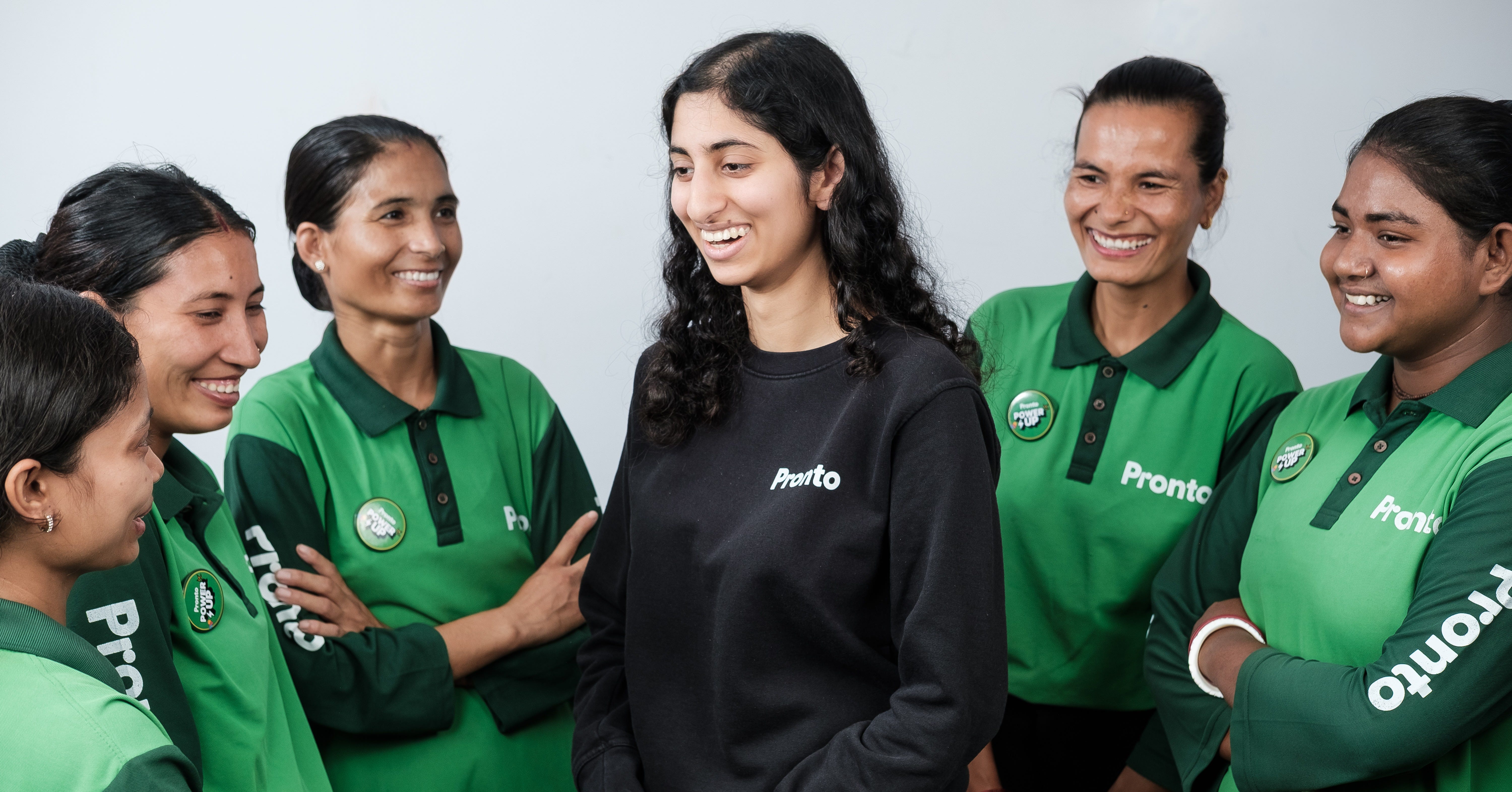
The question we should be asking ourselves: If nobody makes money at Rs 150 and capital keeps pouring in, what’s actually being bought?
When the math doesn’t make sense, something has to give. Something has to close the gap. That something is usually you. Or to be more specific, your data.
Pronto was caught in an online storm when a media investigation revealed that its service personnel were entering homes with a camera (only after a customer opted-in) to record everything and use that data to train physical AI models.
Now, it’s well-understood how critical real-life data is. Foundational labs, robotics companies and young startups would pay through their noses to acquire real-world data from people’s homes that can be labelled and used to train better models. The CEOs of Urban Company and Snabbit issued public statements that their companies don’t record or collect your data.
On Pronto, customers would opt-in for their data collection model unknowingly which makes the company legally clear but destroys trust in an industry based on hospitality.
You opened the app because your maid didn’t show up. You did not open the app to hand a robotics company the blueprint of your living room.
Another startup, called Shift in New York, launched recently with the premise of free home services, with a caveat – their service is recorded and data will be used to train AI models. Two companies in different geographies are employing the same model. The logic that pushed them into the data collection territory is about to climb up the ladder, into far more intimate territory.
Shift's model can work in the US. A house cleaner in New York runs $25 an hour and the data trade is the only way to make "free" pencil out. India is the opposite market. A large share of urban households already employ affordable, reliable help. It was never a luxury. The product these apps actually sell isn't cheap. It's reliable, verified, trained, and at your door in ten minutes. Price was never the unsolved problem. So closing the AOV gap by selling your household data solves a problem Indian consumers don't have.
It's a short-run compromise to patch unit economics and I don't see it scaling because the moment trust breaks, the one thing these apps are actually selling breaks with it.
Delegation goes intimate
If home services taught us to delegate the mundane tasks, a new crop of ‘concierge’ startups is betting we’re ready to delegate the more personal tasks.
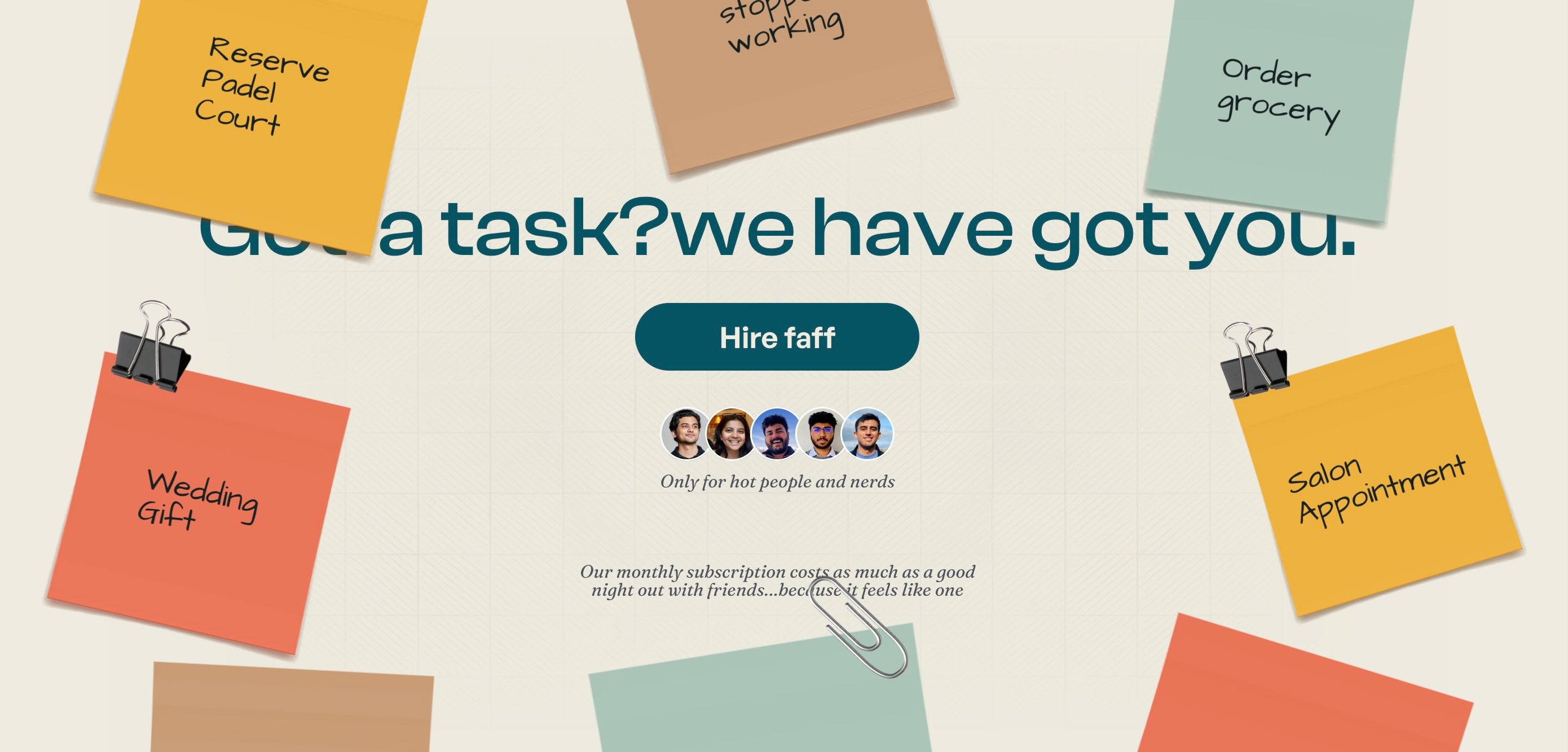
Faff, a personal assistant app in Bangalore, lives entirely on WhatsApp with no app or booking flow. Just drop a message and a human books your dinner table, hunts down a last-minute birthday gift and even fights your airline for a refund. The app claims it is only designed for “hot people and nerds” and has raised $2.6 million.
You identified a need and ordered instant help from one of these home services players. Concierge takes it a step further. It decides what needs to be done.
You could soon outsource not just the chore but the judgement behind it – what’s worth gifting, what’s worth eating or which dinner is worth booking.
Vertical apps pick a single decision to make for you, whereas horizontal ones offer to ‘manage’ your home or office and take a series of decisions for you.
Seasoned founders are entering the fray and launching personal concierge services. M, launched by Dunzo co-founder Kabeer Biswas, wants to run your home. And then there are the oddly specific ones like Cookmate that will decide what your cook should make tonight, so you don’t have to suffer the daily toil of answering “khaane mein kya banana hain?” (what should I cook today?).
To be honest, I get the appeal. There is a real, grinding tax to running a life: the ten micro-decisions before 10AM, the mental tabs that never close, the refund you’ll get around to fighting for eventually. If someone can absorb all of that for the price of a nice dinner, of course you say yes. Affluent urban India is saying yes in growing numbers, and the investors circling these companies are betting the yes only gets louder.
We started by buying back an hour. Now it feels like we are buying our way out of the smallest frictions and calling it ‘optimisation’. Choosing the gift for your loved one, is the relationship. Deciding what to make for dinner and unpacking that suitcase from your work trip, is, in an unglamorous way, running your home.
Are we now paying to be absent from our own lives?
Where does the buck stop?
Imagine you use these concierge services for a year, whether physically or digitally rendered. What gets left behind is the most detailed portrait of you that has ever existed.
Consider what makes a concierge actually useful?
Not just knowing your calendar and that it’s your mother’s birthday, but the fact that your mother likes tulips and you forgot her birthday last year. What you eat when no one’s watching. What are the shows and sports you enjoy in your downtime and other things you’d never ask another human to handle – handed over precisely because the assistant doesn’t judge or isn’t human at all.
We confess more to a chat window or a stranger than to our friends in real life. And this is not a bug. This is the entire reason why these products work.
We are voluntarily assembling the richest behavioural dataset a person can produce of desires, relationships, spending, weaknesses, and handing it to early stage companies whose long-term economics, like everyone else in this space, don’t obviously add up yet. We have seen before what happens when the math gets tight.
The service may be the product today. But if the economics never improve, companies will need another asset to monetise. Data is the most obvious candidate.
Data is the one commodity that only gets more valuable. Meta has been using pictures/videos captured by users of Ray-Ban smart-glasses as fodder to label and train AI models, processed by workers half a world away. Street-view imagery, ride histories, camera feeds, all of it now bought and sold to teach machines about the physical, human world.
A concierge holds something richer than any of that: not what you look at, but what you want. It is the perfect place for this bargain to happen next and we are walking right into it, with our eyes closed and our wallets open.
One core idea that has bugged me for long is that the data you generate trains the system that is meant to replace the person serving you. The assistant booking your dinner, the maid arriving in ten minutes, and every interaction teaches the AI model that aims, eventually, to do their job without them.
You are paying to automate away the very people you outsourced your life to.
The views expressed in this article are solely those of the author and do not represent the views of The Runway, its editors, or any organisation the author is affiliated with. This article is intended for informational purposes only and does not constitute investment advice. The author may have direct or indirect interests in companies or sectors discussed.
Thank you for reading The Runway. We’d love to get your feedback. Drop us a line at hello@therunwaynews.com or just reply to this email.
Amazing thoughts, I feel everything I felt about these quick service apps os poured out perfectly here ♥️
This is an exceptional, systems-level diagnostic. Your core thesis—that India is delegating its daily operations and paying the bill in high-velocity behavioral data—hits the absolute epicenter of modern spatial data science.
From an analytics perspective on substack.com/@electoralindex, the massive transaction volume moving through quick-commerce and on-demand home service platforms represents the ultimate real-time sensor for economic sentiment. Traditional polling models and consumer confidence indices suffer from severe lagging and sampling anomalies because they rely on slow, self-reported survey methods.
The hyper-local data generated by platforms delivering groceries or home maintenance in 10 minutes acts as an unvarnished ledger of regional disposable surplus and neighborhood-level resource allocation. By incorporating these high-velocity consumption metrics into our demographic survey raking matrices, we can map structural shifts in household stress and localized voter volatility that traditional, macro-level polling entirely misses until counting day.