


Limited partners are grabbing front-row seats at startup cap tables, changing the rules of engagement in India’s venture capital market. In Edition #4 we take a stab at decoding what’s driving the shift. Also, catch our conversation with Blume Ventures partner Arpit Agarwal on his journey into venture capital and what defines his investing playbook. And, in Recco, read about luxury shirtmaker 100Hands’ homecoming.
Lede
The New Rules of Engagement in India’s VC Market
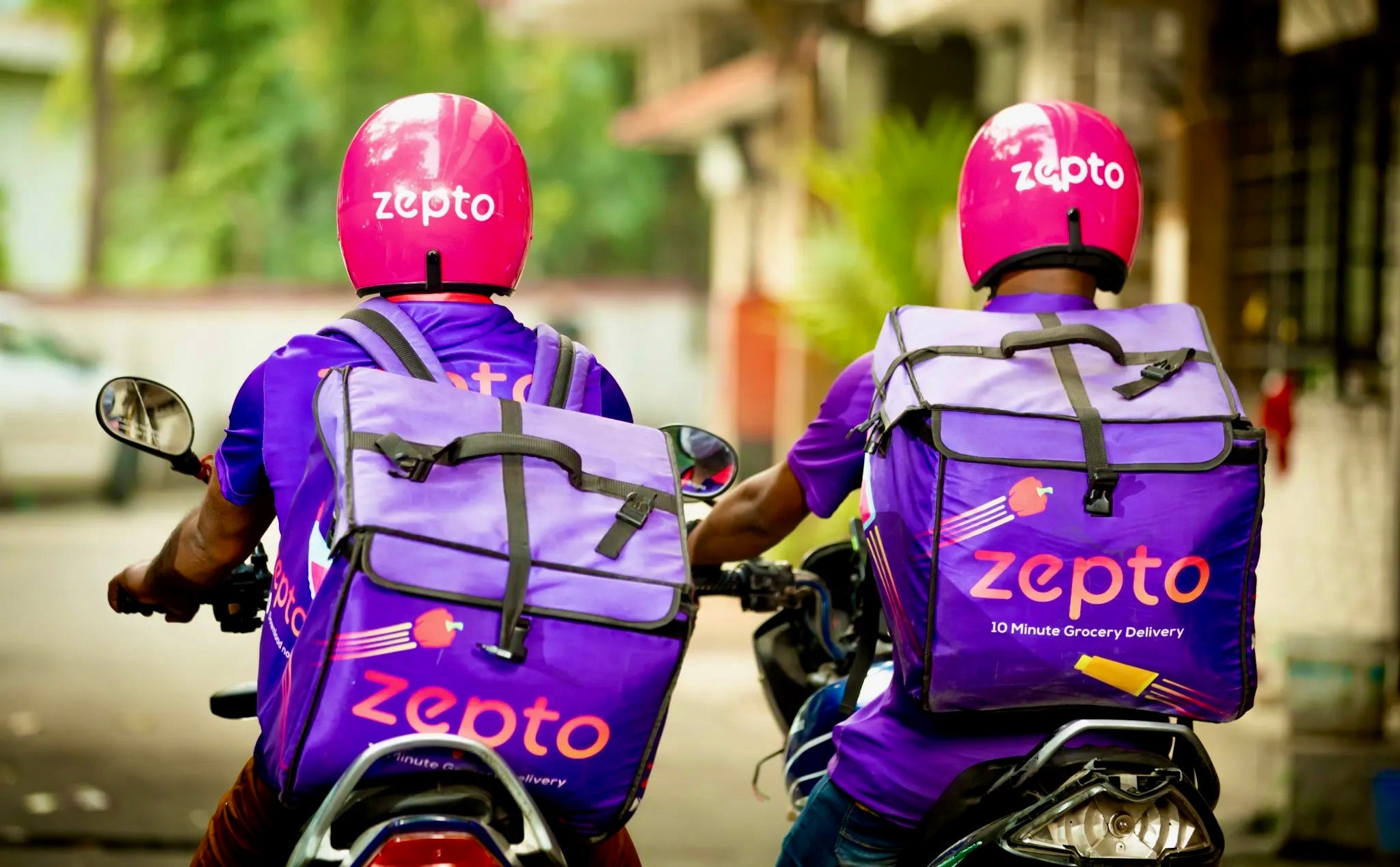
CalPERS isn’t a name you’d usually expect on a startup’s cap table.
But this month, the US pension fund, one of private equity’s oldest and largest patrons, led a $450 million funding round in quick commerce startup Zepto. The deal signals CalPERS’ confidence in India’s consumption-driven economy. It also underscores a broader shift in venture capital dynamics – limited partners increasingly seeking direct oversight to secure and maximise returns in prime assets.
CalPERS joined existing Zepto backer General Catalyst to anchor the latest round, helping bump up the quick commerce startup’s valuation by 40% to $7 billion within a year. CalPERS is a limited partner (LP) in several of US venture capital (VC) firm General Catalyst’s funds. The pension fund wasn’t the only LP in the round. New York-based StepStone Group, which co-led a $665 million fundraise in June last year, was a return investor in the latest round. StepStone is an LP in Mumbai-based VC firm Nexus Venture Partners, which is also an investor in Zepto.
StepStone and CalPERS aren’t exceptions. The blurring of lines between LPs and general partners (GP) on cap tables has been unfolding for over a decade and has accelerated in the last 2-3 years.
The Canadian Pension Plan Board (CPP Investments), for instance, has been an advocate of the hybrid strategy since its entry here in 2010, picking up direct stakes in mature startups such as logistics platform Delhivery (it sold its 6% stake for $220 million last year), beleaguered edtech Byju’s, digital content startup Verse Innovation and edtech Eruditus. The Ontario Teachers Pension Plan, Canada’s third largest pension fund, invested in former ecommerce unicorn Snapdeal back in 2016 and now invests directly in startups through its Teachers Venture Growth (TVG) arm. Recent investments include HR SaaS startup Darwinbox, supply chain financing platform Mintifi, and fintech Perfios.
Sovereign wealth funds from the Middle East including Abu Dhabi Investment Authority (ADIA) and Qatar Investment Authority (QIA) have also been prolific with direct investments. ADIA’s notable startup bets include beauty products retailer Purplle and eyewear retailer Lenskart, while QIA has backed cloud kitchens startup Rebel Foods and food delivery platform Swiggy among others.
A large part of the changing narrative is also being driven by Indian family offices, many of whom entered the market as LPs but diversified into direct investments.
While most of these family offices continue to back VC funds, co-investment rights have lately become a pre-condition for such commitments. The direct investment portfolios of family offices such as Premji Invest and Sharrp Ventures now rival those of leading VC firms. Rather than remain passive investors, they prefer a seat at the table to drive outcomes in the assets of the funds they back.
Why LPs want a seat at the table
The phenomenon of LPs investing directly in startups isn’t unique to India.
In mature markets such as the US and Europe, sovereign wealth funds, especially from Asia and the Middle East, have led the charge, and traditional LPs such as public pension funds and even a handful of university endowments have followed suit. The private equity (PE) arena and later stage VC focused on technology have been their preferred hunting grounds.
For LPs, whether in the US and Europe or in India, the shift towards more active participation has been driven by a number of factors.
Returns and fee efficiency: The fee structure – 2% management fee and 20% carry – demanded by PE/VC firms has been a bugbear with LPs for a while, especially in the face of a prolonged period of VC funds underperforming the public markets. Direct investments imply zero management fee and carry, improving the return potential per dollar invested.
Oversight: In backing PE/VC funds, LPs are essentially committing to a blind-pool. While they may have processes in place to monitor how the money is being deployed, for the large part they have to depend on GP discretion and expertise when it comes to portfolio construction. Specific to India, in recent years, this has proved to be a problem. A string of governance lapses and financial irregularities at prominent startups have led to scandals and write-offs. With direct investments, they have the option to diligence GP portfolios more closely, especially bets that are potential winners, and influence outcomes.
Shorter liquidity timelines: Liquidity has been an issue across markets but in India, it has been particularly acute. The growing presence of LPs as direct investors on the cap tables of pre-IPO startups isn’t a co-incidence. Rather than commit to a 10-year fund, which is more likely than not to extend its lifecycle by a couple more years at least, direct investments offer a quicker path to returns.
A delicate balance
The convergence of LPs and GPs on startup cap tables will foster a more collaborative approach to early stage investing and ultimately build trust – the foundation of the VC business. But, it also comes with complexities that both sides will have to learn to navigate to enable entrepreneurs to continue creating the value they seek.
Given their deep resources, the presence of pension funds and sovereign wealth funds on cap tables significantly expands the capital pool available for funding rounds. This enables such investors to step in and fill late-stage funding gaps, reducing reliance on traditional VC. We’ve already seen this play out during the two-year downturn from which the Indian startup ecosystem has recently emerged. Most traditional VCs were compelled to reserve their resources and slow down on large rounds.
But, the flip side is that access to large pools of non-traditional capital can also lead to valuation bubbles and reckless spending. The downturn, in fact, was a fallout of too much money too soon in the system, chiefly in 2021 when early stage investments (and valuations) touched record highs.
Direct investments could become a double-edge sword for LPs. Having an LP on the cap table is often seen as validation of a startup’s credibility, both by other investors and founders. Their presence can push startups to improve transparency and governance. LPs come with more stringent oversight and governance demands, given that they are ultimately answerable to their own stakeholders (public pensioners and citizens). But, it’s pertinent to bear in mind that even with their robust due diligence and governance processes, direct investments haven’t always ended happily for LPs. Byju’s, in which QIA was an investor, is a prime example. Most LPs are unaccustomed to actively monitoring investments (most don’t have the teams and bandwidth) and end up relying on existing GPs on the cap table.
Pros and cons aside, the acceleration of direct investments by LPs, domestic and global, is changing the rules of engagement in India’s VC market in ways that couldn’t have been imagined a decade ago.
So far, the dynamics have played out amicably.
LPs, for the most part, continue to rely on GPs for sourcing and active monitoring while GPs benefit in terms of access to deeper capital pools for portfolio winners (most global LPs have chosen to go direct at the later, pre-IPO stages). The LP co-investment approach has worked out particularly well for first-time funds, who are more than open to having LPs, specifically the growing base of Indian family offices, co-invest in deals given their limited resources.
It’s still a delicate balance but if the dynamics are managed well, more sustainable businesses will be built and India’s startup ecosystem wins.
Recco | Notes on Culture, Craft, and the Considered Life
100 Hands Comes Home
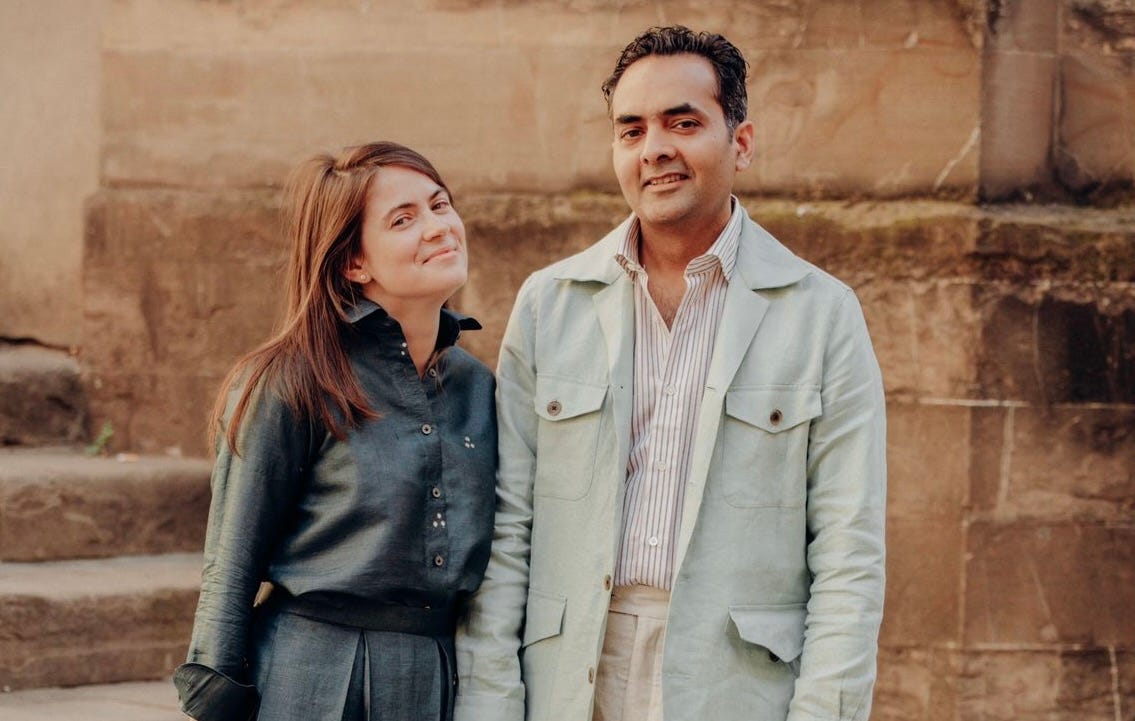
When the Parisian department store Galeries Lafayette opens in Mumbai next month, it will feature one of India’s most accomplished luxury exports — 100Hands.
Founded by ex-bankers Akshat Jain and Varvara Maslova, the Amsterdam-based label makes every shirt by hand at its atelier in Amritsar, where each piece takes between 16 and 36 hours to complete. What began as a ten-member workshop has grown into an atelier of over 250 master cutters, pattern makers and hand-stitching specialists.
Recognised by the Financial Times as one of the world’s best shirtmakers, 100Hands is stocked at Harrods and Bergdorf Goodman, where it shares space with Tom Ford, Zegna and Kiton.
The company plans to open its first flagship store on Savile Row in London in Q2 2026, a milestone for an Indian maker working at this level of precision.


Every shirt is cut from fine linens and two and three-ply cottons sourced from mills in Switzerland and Italy, finished with hand-rolled seams and a distinct, lightly structured collar. Its clients include Sachin Tendulkar, Adi Godrej and several global business leaders. Alongside ready-to-wear, bespoke and made-to-measure lines, 100Hands also offers Traveller’s jackets in similar fabrics. Prices in India will start at about ₹37,000.
Thank you for reading The Runway. We’d love to get your feedback. Drop us a line and stay tuned for the next edition.