


A quick review of how the past nine months have played out in terms of investments. Also from last week, big-ticket infrastructure funding, fintech’s IPO pop and the government’s deep tech fund. Welcome to Edition #50.
New to The Runway? Every week, I bring you a curated briefing on the deals, strategies and people shaping private equity and venture capital in India. Send me tips and feedback at snigdha@therunwaynews.com. Keep track of future editions via LinkedIn and WhatsApp.

We’ve stepped into the final quarter of 2026. It’s been quite the year so far. Conflict in West Asia, an economy under pressure, a delayed monsoon and choppy public markets. The private equity and venture capital (PE-VC) market felt the ripple effects.
Investors put $21.6 billion to work and closed 602 deals between January and September. Deal volumes fell 29% from the first quarter to the second and remained flat in the third. Buyout and growth capital dominated the third quarter as institutional investors gravitated towards healthcare, infrastructure and energy assets. Startups at the seed and Series A stages faced a measurably tighter environment.
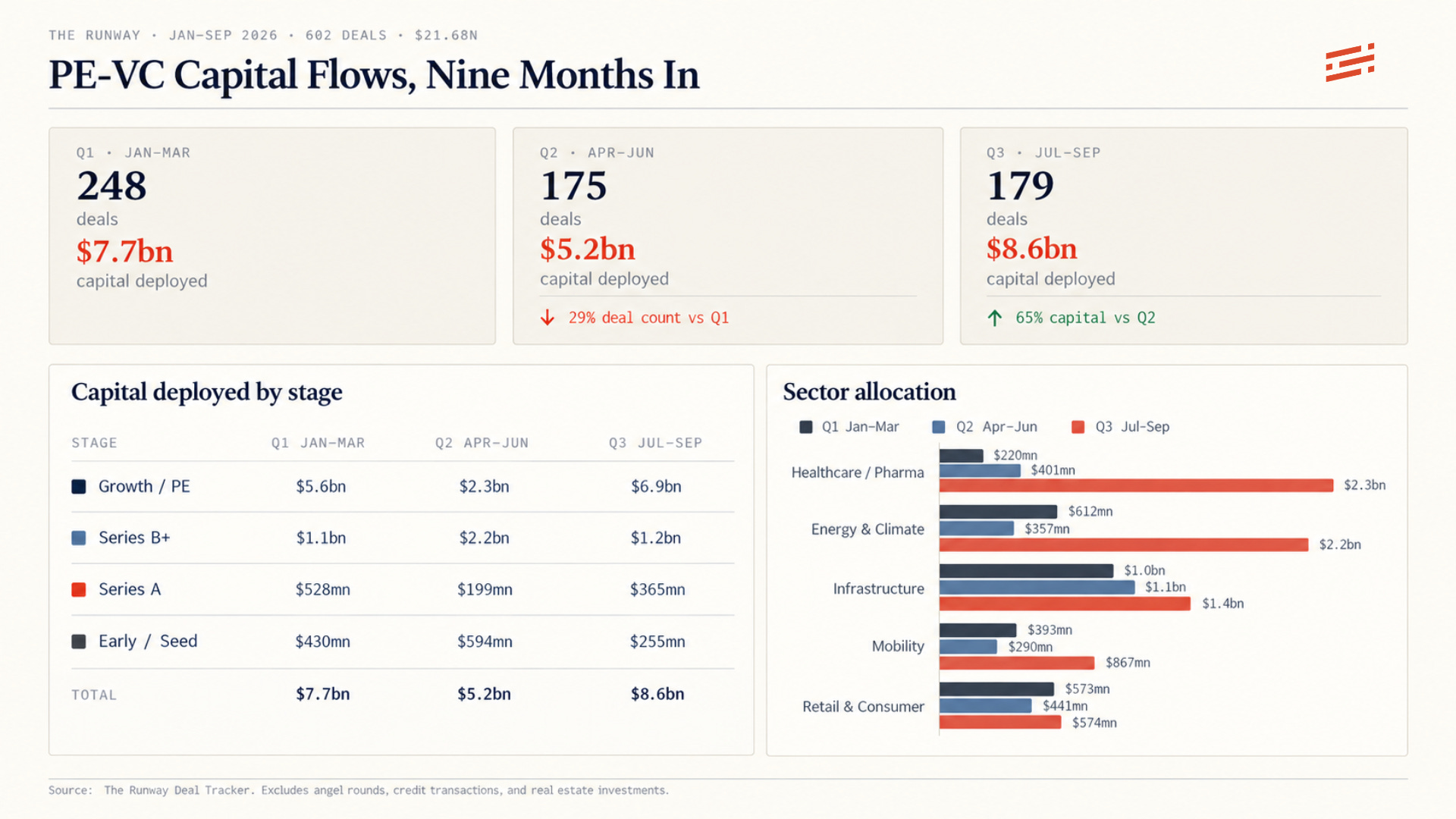
Here are some takeaways on how private capital moved in the nine months ended September.
The first quarter saw $7.7 billion deployed across 248 deals, the strongest three months of the year. The second quarter pulled back – $5.2 billion across 175 deals, a contraction of roughly a third in value. The third quarter recovered to $8.6 billion, driven almost entirely by big-ticket PE transactions. Strip out the handful of mega deals in Q3 and the underlying market looks softer.
The early stage was less buoyant. Seed funding in Q3 fell 57% to $255 million against $594 million in Q2. Series A investments declined from $528 million in Q1 to $199 million in Q2 and recovered partially to $365 million in Q3.
In terms of sectors, financial services, including fintech, commanded the most capital in Q1 ($1.35 billion) and Q2 ($1.41 billion) but declined to $334 million in Q3. The winners in Q3 were healthcare and pharmaceuticals, which cornered $2.28 billion, up from $621 million in the first two quarters combined; energy and climate, which pulled in $2.24 billion, a more than six-fold jump from Q2’s $357 million; and infrastructure, which tracked a steady $1 billion, $1.1 billion and $1.4 billion across the three quarters respectively.
Enterprise technology, a category that drew $854 million in Q1, tapered to $532 million in Q2 and fell further to $292 million in Q3.
We’ll be back at the end of the year to tell you how Q4 and the year as a whole worked out.
People, IPOs and Policy
Mayank Khanduja signs up with Bessemer India
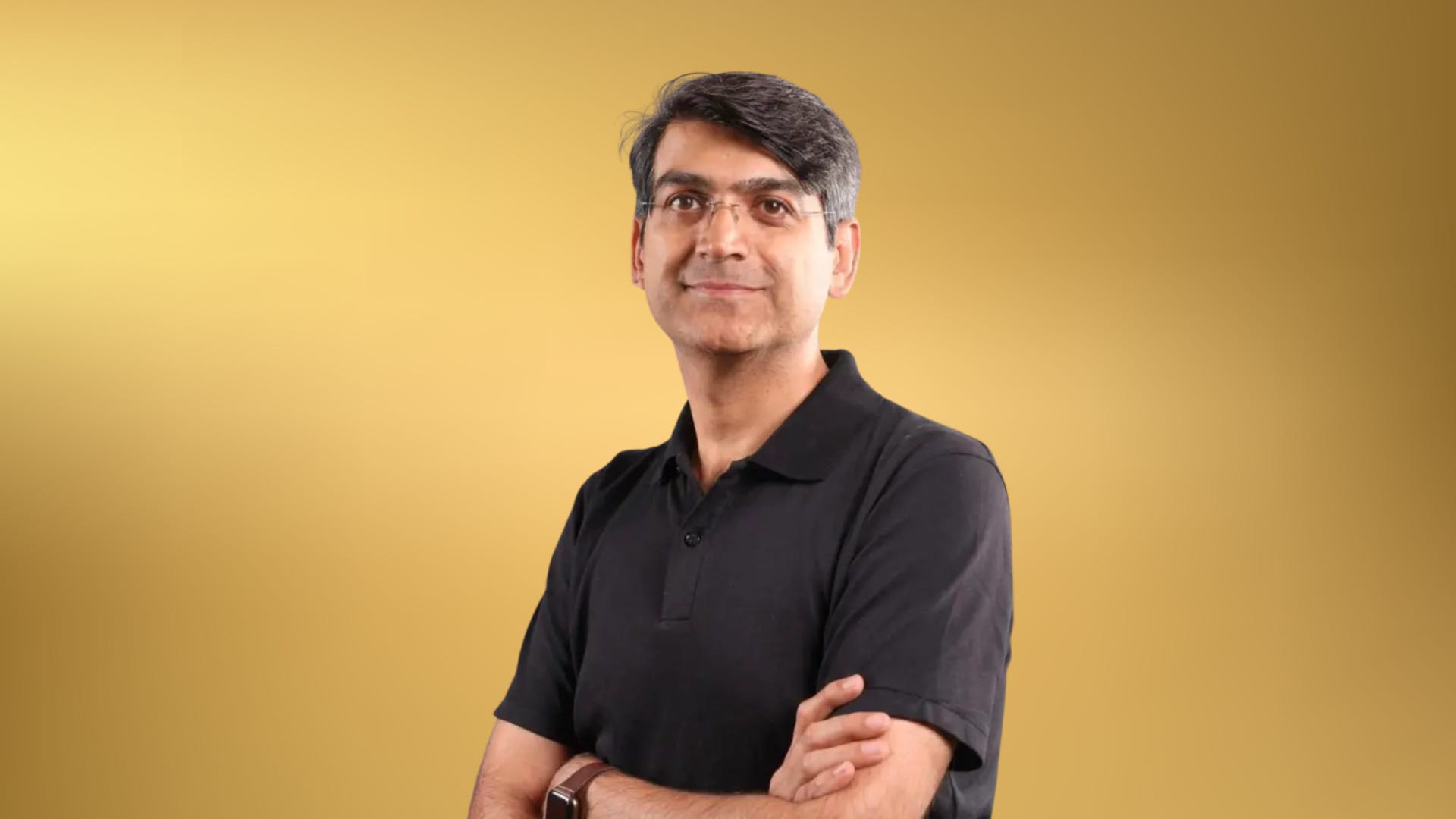
Former Elevation Capital partner Mayank Khanduja joined Bessemer Venture Partners in India as a partner, stepping down from Elevation after a nearly 15-year stint. He will invest at the early stage across AI, consumer and healthcare, and said he plans to back founders from the earliest stage of company building.
Khanduja, who is based in Bangalore, cited Bessemer’s global network across the US, London and Tel Aviv as key draw, alongside long-standing relationships with the firm’s India partners including Vishal Gupta and Anant Vidur Puri. His move comes as Bessemer deploys a $350 million second India fund.
Moneyview brings cheer to fintech investors
Fintech IPOs met with mixed fortunes at the bourses this year. Aye Finance’s debut in February was flat. Then Kissht came along in May to list at a 11.7% premium to its Rs 171 offer price. And, Moneyview’s listing last week got an emphatic nod from the market.
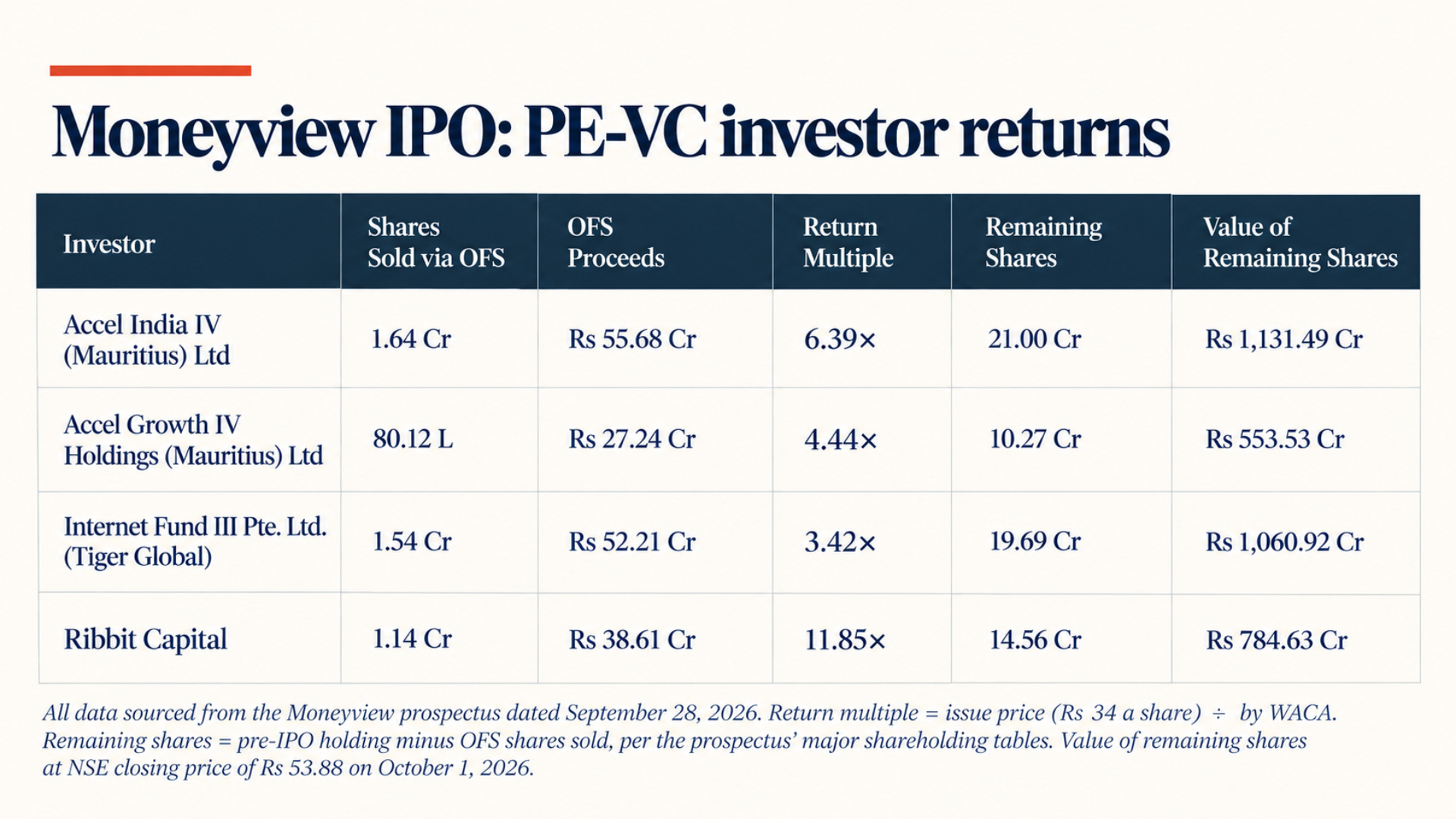
The Bangalore-based digital lender’s stock opened at Rs 55 a share on the NSE, a 61.7% premium to the issue price of Rs 34 a share. The IPO was subscribed 98.46 times overall. The Rs 1,091.68 crore offering included a Rs 341.68 crore offer for sale (OFS), which gave early investors partial exits.
Among sellers, Accel, Tiger Global and Ribbit Capital booked sizeable profits. For FY2026, Moneyview reported revenues from operations at Rs 3,351.6 crore and profit after tax at Rs 242.71 crore. Loan disbursals in FY2026 touched Rs 23,098 crore while total assets under management as of June 30, 2026, stood at Rs 22,520 crore.
In upcoming IPOs, Norwest Venture Partners-backed Everbrands India, the master franchisee for Subway restaurants in South Asia, filed its draft prospectus to raise Rs 600 crore via a fresh issue of shares. Read more in Mint.
The government’s deep tech fund: What happened
The government’s Research, Development and Innovation (RDI) fund, launched in November last year with a mandate to disburse Rs 1 lakh crore in low-cost loans to deep tech startups over a six-year period, has paused new applications to the scheme.
On Wednesday, September 30, the Technology Development Board (TDB), one of two agencies authorized to disburse funds from the scheme, posted a notice on its website saying that it was closing its call for proposals, citing “administrative reasons.”
TDB, The Indian Express reported, had exhausted its initial Rs 2,000 crore allocation during the first round of selections in April, when it committed soft loans worth Rs 2,192 crore to 22 companies, including Agnikul Cosmos, GalaxEye, QuNu Labs and IdeaForge. Over 300 companies applied to the programme and 13 more selected companies are currently awaiting their letters of intent, the report said.
The second disbursing agency, the Biotechnology Industry Research Assistance Council (BIRAC), hasn’t made any disbursals so far, pending clarifications sought from the Ministry of Finance on potential tax liabilities. Also, the appointment of additional private sector disbursing agencies has stalled.
Separately, a conflict-of-interest cloud has hung over the programme since early August. The Indian Express had reported that 15 of the 22 first-round recipients had investment ties to members of the selection committee.
On October 1, the government put out a clarification regarding the earlier notice on pausing disbursements. The Ministry of Science & Technology press release called the funding shortage narrative “not correct” and said the TDB paused due to a “massive influx of project proposals” and not a cash crunch. It added that the DST and ANRF were in the process of appointing additional disbursing agencies.
The Week in Deals

Dive into the deals that drove the past week.
→ Infrastructure
KKR agreed to acquire a majority stake in Cisternina Logistics as part of a strategy to consolidate bulk liquid and gas storage across India.
Mumbai-based Cisternina will acquire the liquid storage terminal and rail logistics business of Ganesh Benzoplast, a publicly listed company which is selling the assets for Rs 1,154 crore ($120 million).
The acquisition will give Cisternina access to approximately 500,000 kilolitres of storage capacity in JNPT, Cochin and Goa.
KKR is making the investment from its Asia Pacific infrastructure strategy through which it has already invested in Serentica Renewables, Hero Future Energies and Leap India.
Meanwhile, Actis has been busy consolidating and widening its presence across roads and renewable energy. Both moves underline the private equity firm’s continued strategy to build scaled infrastructure platforms.
In roads, the firm is consolidating 11 assets spanning more than 3,000 lane kilometres across 10 states under NXT-Infra Trust. The platform combines assets from Actis Long Life Infrastructure Fund 1 and Fund 2, with NXT-Infra Trust acquiring the roads portfolio held by Fund 2. The transaction was accompanied by a Rs 1,187.5 crore capital raise from domestic investors. Actis funds will hold 71% of the entity.
In renewables, it launched Leo Energies, its fourth Indian renewable energy platform, targeting over 3GW of onshore wind, solar and battery storage capacity. Bloomberg reported Actis’ committed capital for the platform at $2 billion.
The platform has agreements to acquire 650 MWp of operational solar assets across five states with 160 MWp of generation capacity and 50 MWh of battery storage already tied up. In October last year, it signed a share purchase agreement to acquire publicly listed Truere Oriana Power’s 74% stake in two subsidiaries – Truere Guj SPV and Truere Current. Buy-and-build and acquisition with greenfield opportunities will continue to be the growth strategy going forward.
→ Pharma and Healthcare
Linux Laboratories, a Chennai-based speciality pharmaceutical company focused on CNS (central nervous system) therapies, raised $70 million from ChrysCapital and Tata Capital Healthcare Fund III (TCHF III).
The transaction involved a primary capital infusion and a secondary purchase and marked the full exit of TCHF II, which had invested five years ago. ChrysCapital acquired a significant minority stake.
Linux has built a portfolio of over 125 brands across 400-odd SKUs with a concentration in epilepsy, neuropathic pain, depression and autism.
The company has grown through organic brand building and acquisitions. It integrated portfolios from Biomedica and Indiabulls Pharmaceuticals and acquired brands from Cipla and Dr Reddy’s Laboratories. It also operates a WHO-GMP certified manufacturing facility that supports a contract development and manufacturing business.
Also last week, Jaipur-based Aignosis raised $0.4 million in a seed round from Antler and Zerodha’s Nikhil Kamath. The startup has built an AI-assisted autism and developmental screening platform to assess behavioural signals in children.
→ Enterprise Tech
CScale: Premji Invest co-led a $145 million Series C in CScale, a Palo Alto, California-based startup building hardware that keeps AI training clusters connected. Atreides Management and Valor Equity Partners were the other lead investors in the round. NVIDIA and Intel Capital joined as new investors. CScale’s technology is aimed at enabling AI training clusters operating inside data centres at gigawatt-scale to function without interruption.
Ascerta: Wipro Ventures, the corporate investment arm of IT services major Wipro, participated in the $18.1 million Series A of Ascerta, formerly known as Pay-i. The round was led by Dell Technologies Capital. Bellevue, Washington-based Ascerta builds software that helps enterprises track the cost and business impact of their AI deployments. Wipro adopted the platform for its own enterprise AI practice and invested as part of that commercial relationship.
Zaperon: Inflection Point Ventures led a $0.7 million seed round in Zaperon, a Delhi-based startup that offers a unified platform for identity security, data security and AI governance.
→ Hospitality
CPP Investments made its first direct bet on Indian hospitality with a Rs 3,000 crore ($311.4 million) investment in Prestige Hospitality Ventures (PHVL). The Canadian pension fund manager picked up a 27% stake in the Bangalore-based company.
PHVL, which is the hotels development and management arm of Prestige Estates Projects. operates luxury and premium across major cities including Bangalore, Chennai, Delhi, Goa, Hyderabad and Mumbai. For CPP Investments, the deal follows earlier hospitality investments in Japan and Korea.
→ Agritech, Mobility and Edtech
Balwaan Krishi raised Rs 100 crore ($10.4 million) in a Series B led by First Bridge India Growth Fund. The Jaipur-based company manufactures farm equipment such as power reapers, water pumps, chainsaws and chaff cutters.
Simple Energy closed a Rs 1,750 crore (approximately $182 million) Series C led by the family office of Thyrocare Technologies founder Arokiaswamy Velumani, an existing investor. The Bangalore-based electric two-wheeler company’s founders, Suhas Rajlkumar and Ankit Gupta, participated in the round along with the Haran Family Office. Velumani’s family office had invested in Simple Energy’s $26 million Series B in June.
Gravity raised $15 million in a round led by 3one4 Capital and Info Edge Ventures. Alteria Capital and Genesia Ventures participated. The Bangalore-based startup, founded by former Livspace executives Saurabh Jain and Lalit Mittal, consolidates the supply chain of specialist kitchens and wardrobe businesses on to shared technology and distribution infrastructure. Its customers are interior architects, design-and-build firms and modular furniture showrooms.
Arivihan closed a Rs 95.86 crore ($10 million) Series A led by returning investors Accel and Prosus Ventures. GSF Accelerator partners, including Rajesh Sawhney, Dinesh Agarwal, Dinesh Gulati and Guarav Kapur participated. Post-investment, Accel holds a 23.54% stake and Prosus Ventures holds 18.57%. The round follows a $4.17 million pre-Series A in the Indore-based edtech in 2025. The company, incubated by GSF in 2024, offers AI-powered personalised coaching for school students and is currently focused on Class 12, CBSE board preparation and NEET, with 80% of subscribers from Tier 3 and 4 cities and rural India.
→ Consumer

Naiyya Saggi’s consumer appliances startup EDT closed a $2.4 million pre-Series A led by returning investor Sauce VC. Consumer Collective by Atrium, also an existing investor, and venture lender Alteria Capital participated in the round along with a group of angels including Nicobar founder Raul Rai and Atomberg founders Shibam das and Arindam Paul. The Mumbai-based company, which earlier launched kitchen appliances Luma (air fryer) and Flow (electric kettle), is now venturing into “beauty-tech” with the launch of Suki, a hair dryer.
Nudge (earlier known as BeBetta) raised an undisclosed sum in a new funding round led by returning investor Adani Family Office, the company said in a statement. The funding follows a pivot away from its origins as a sport engagement platform. Adani Family Office has first backed the Bangalore-based company in its seed round in 2024, a spokesperson said. In its new form, the company runs a receipt-based rewards and consumer intelligence business.
Watch maker Bangalore Watch Company raised a $1.4 million seed round from undisclosed individual investors.
Thank you for reading The Runway. We’d love to get your feedback. Drop us a line at hello@therunwaynews.com or just reply to this email.