


Welcome to Edition #2 of The Runway. We unpack ChrysCapital’s consumer play post the Theobroma buyout; Elev8 Venture Partners’ Navin Honagudi shares his plans for Fund I; and in Pursuits, we point you towards Indian ateliers redefining fine footwear.
Tell us what you liked (didn’t like) about this edition. We’d love to get your ideas and suggestions to shape future editions.
Lede
India’s Largest PE Firm is Shopping for the Next Breakout Homegrown Brand

Rajiv Batra is on a gastronomical quest. After snapping up Mumbai’s iconic patisserie chain Theobroma, the ChrysCapital fund manager is scouting the next homegrown F&B business to add to his plate. If Batra has his way, the next one will be a ‘centre of plate’ brand.
“Theobroma presented a good opportunity because in Western desserts it’s only Indian players who have scaled. But what’s interesting now is that even in categories largely dominated by MNCs, smart entrepreneurs are scaling F&B businesses in their own differentiated way,” Batra, who leads consumer investments for ChrysCapital, told The Runway in a conversation on the firm’s broader consumer play.
India’s largest homegrown private equity (PE) firm acquired nearly 90% of Theobroma for a reported ₹2,410 crore in July this year, marking its first buyout in the consumer sector. Buyouts – acquiring control stakes – are a big focus for the record $2 billion+ new fund it is currently raising (Bloomberg reported commitments worth $2.1 billion, though a formal announcement is pending). The firm has raised $5 billion across nine successive funds since it was founded in 1999.
From desserts to ‘centre of plate’
The Theobroma acquisition crystallises ChrysCapital’s conviction in India’s F&B opportunity and its ambition to build a QSR-centric portfolio of category-defining homegrown brands across the gastronomy spectrum.
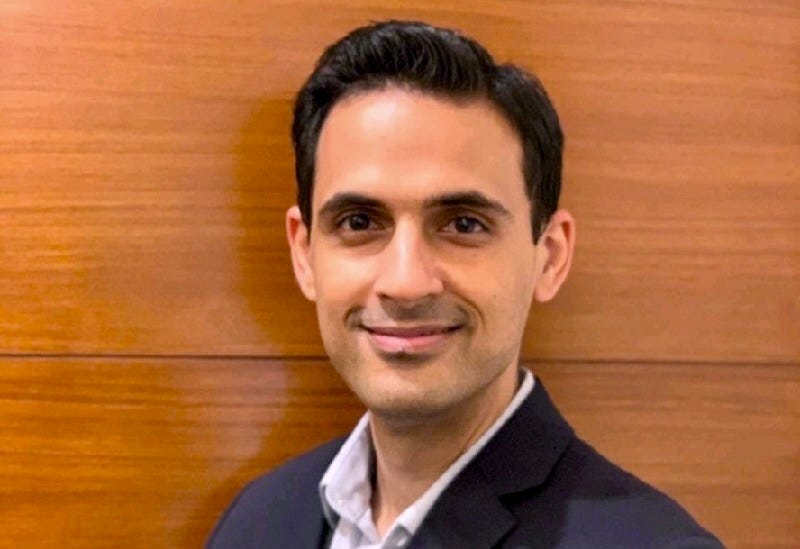
“There are large pockets where either global brands are not present or are early in the wave of expansion. Gourmet burger and pizza chains are a big trend, as are cafes and coffee chains,” Batra said, adding that “For the next fund, ‘centre of plate’ will be the focus.”
The timing is propitious.
Post-pandemic, India’s food services market has rebounded strongly. In 2024, it was pegged at $80 billion, growing at a CAGR of 10–11%, according to RedSeer Consulting. Organised players — restaurants (including QSRs) and online food services — made up 45–50% of the market. By 2030, the report projects a $144–152 billion market, with organised players rising to 60–70%.
That said, QSRs have faced headwinds in recent months. Media reports citing BNP Paribas highlight margins squeezed by higher input costs, rentals, and aggregator commissions. Listed QSRs grew revenues by around 10% in FY25, but food delivery platforms like Swiggy and Zomato expanded faster, with gross order value up nearly 18–19%. The growth curve has tilted towards aggregators, leaving QSRs with a tougher path to profitability.
“If you look at the first wave of QSRs – Jubilant FoodWorks with Domino’s or Devyani International with Yum Brands – they’ve scaled well. Private equity has had a part to play in some of them and made good returns. The (QSR) business model at its core is a good one,” said Batra.
Devyani International, which franchises KFC and Pizza Hut in India, first raised capital from Temasek Holdings in 2014 and listed successfully in 2021. Burger King, which partnered with Everstone Capital in 2013 to launch the franchise here, now has over 300 outlets. The company (now Restaurants Brands Asia) went public in 2020.
The more recent QSR wave Batra is bullish on is dominated by homegrown brands that are using technology, new cuisines and formats to differentiate. Internet restaurant players such as Curefoods and Rebel Foods are leveraging cloud kitchens to build asset-light platforms. Wow! Momo, backed by Tiger Global and Malaysia’s Khazanah, has scaled to 700+ outlets with dumplings and quick Asian meals. Specialist coffee chains are also growing fast — among them, Blue Tokai (backed by A91 Partners) and Third Wave Coffee (backed by WestBridge).
For ChrysCapital, scaling Theobroma post its buyout will be the learning ground for future QSR bets. The plan is to grow the current 280-odd outlets to 1,000-plus, gradually expanding into new cities beyond the top six metros (Delhi, Mumbai, Bangalore) that currently account for 70% of outlets.
Premiumisation and scale play
Theobroma ticks several boxes for ChryCapital in the context of its broader consumer strategy. The consumer market is a relatively new frontier for the firm. While there have been opportunistic bets in the past (CavinKare and TCNS Clothing), it has traditionally leaned towards sectors such as financial services and healthcare and lifesciences.
Consumer investments got off the ground as a deliberate strategy with a $50 million bet on skincare brand Wow Skin Science in 2021. This was followed by a $100 million investment in omnichannel eyewear retailer Lenskart in 2023, and Theobroma in July this year. Last month it invested in The Sleep Company, a direct-to-consumer (D2C) brand that makes mattresses and bedding products.
Batra outlined four pillars that define ChrysCapital’s consumer strategy:
Sectors: The firm has identified four sub-sectors – food services or F&B, packaged foods, retail, and beauty and personal care.
Premiumisation: The four (above) represent multi-billion dollar sub-sectors where large brands can be built as rising incomes and aspirations prompt consumers to shift from unbranded to branded products and services and higher discretionary spends. The firm prefers the mass premium segment, where consumers are trading up for better quality, safety and experiences. “That journey is just starting. If you look at the next 10-15 years, that's our key bet,” Batra said.
Scale Play: Businesses that have already scaled revenues to $50-70 million (Rs 500 crore+) are its sweet spot. This gives the firm room to work closely with the management team and the founders to scale the business at least 3-4x within a five-year period.
Family-owned Businesses: With the focus on buyout deals, family-owned businesses make more sense. Such businesses are usually more open to giving up control and cashing out, especially as next-gen heirs opt out.
The consumer push also comes on the back of resilient domestic private consumption spending which currently accounts for nearly 60% of the country’s GDP. Despite high tariffs imposed by the US government earlier this year, India’s GDP grew 7.8% in Q1 FY26. Based on the surprise performance, GDP growth for FY26 is projected to stay on course at 6.5% and private consumption is expected to remain an important contributor.
Batra will be betting on that as he embarks on bulking up ChrysCapital’s relatively modest consumer portfolio. “We’ve done three consumer deals in the last three years (Lenskart, The Sleep Company and Theobroma). So the current fund has a reasonably good exposure to consumer and I’m hoping that continues, subject to finding the right founder and management teams to back.”
Quick Five
“We Will Not Underwrite Mortality Risk” — Navin Honagudi, Elev8
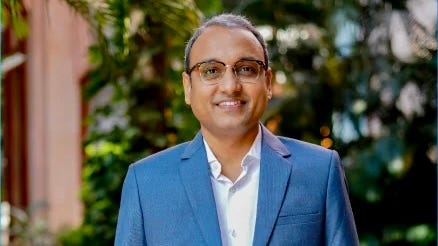
Navin Honagudi founded Elev8 Venture Partners in 2022, when India’s venture capital market was in flux. The early-stage arena, where Honagudi invested as part of Kae Capital, was getting crowded. Firms that typically played at Series A+ were moving upstream, while micro-funds had sprung up. At the same time, several traditional investors had shifted into mid-market private equity. That left a gap at the growth stage – companies valued at $200-300 million seeking $10-30 million cheques.
These shifts shaped Elev8’s thesis, leading to its debut fund, which marked a final close at $160 million earlier this month. The fund is anchored by KB Investments, an affiliate of South Korea’s KB Group. About 50% of the corpus has come from domestic investors. Here’s Honagudi on Elev8’s approach, the rise of Indian limited partners (LP), and investing in AstroTalk.
Edited excerpts:
What is Elev8’s core investment thesis?
We will not underwrite mortality risk in a business. This means investing in profitable companies in the $20-70 million revenue range. We look for specific quantitative indicators such as being the No. 1 or 2 player in their categories and growing at 50% year-on-year. The capital-constrained environment has forced founders to either become profitable or perish. There are far more profitable companies today (compared to 2021-2022), growing fast. That works well for our thesis.
Why did Fund I raise less than the targeted $200 million. What’s the deployment plan?
Strong co-investment interest from our LPs influenced that decision. When LPs co-invest significant amounts – for example in Porter and Smallcase – it allows us to achieve desired cheque sizes and board representation without needing the full $200 million from the fund.
This model is actually more beneficial, being lighter on the fund’s balance sheet while enabling us to write the necessary cheques.
We’ll invest in 12–13 companies across consumer internet, enterprise software and fintech. Five are already in the portfolio: Smallcase, IDfy, AstroTalk, Snapmint and Porter. Cheques will typically be $10-15 million, with 75-80% of the capital invested upfront. Since the companies are profitable with low mortality risk, we can maximise our investment at the most attractive entry valuations.
How significant is the contribution of Indian family offices in the fund?
Elev8 is anchored by KB Investments, which has committed a significant portion. We have a mix of global and Indian capital, roughly 50% each. Within the Indian capital, local family offices constitute about 40% of the investor base, with the sweet spot for investments ranging from ₹10-25 crores, though exceptions exist for smaller and larger checks.
How are Indian family offices different from global LPs?
Indian investors, including family offices, focus more on DPI and IRR rather than MOIC. A global investor may prefer holding for five years at a 20% IRR due to compounding, whereas an Indian investor may prioritise a 25% IRR even with a shorter three-year holding.
Everyone’s excited about AstroTalk (Elev8 led a $14 million round in June last year). What did you find compelling about the model?
The thesis for AstroTalk was based on market size, the fact that it was almost entirely offline, and its replicability online. While some services rely on touch and feel, astrology depends on data like date and time of birth, making it well-suited for online platforms.
AstroTalk already commands 80% of the online astrology market, which itself is only 2% of a $15 billion+ market. Critically, we’ve seen strong historical performance. They’re on track to do Rs 200 crore PAT for FY25 and reported revenues at Rs 1,200 crore in FY24.
Recco | Notes on Culture, Craft, and the Considered Life
The Case for Hand-Welted Shoes

The dominance of sneakers has not erased the craft of shoemaking. It has only sharpened the distinction between disposable fashion and objects built to endure. A handful of Indian makers are keeping that tradition alive.
In Mumbai, Nomiri, co-founded by a patent lawyer and a cordwainer, works to Japanese and Italian standards, with bespoke pairs that can take up to six months and have already found favour among the city’s restaurateurs. In Hyderabad, Tarun Oblum brings a contemporary eye to patinas and styles like the Peshawari, drawing Telugu film stars to his atelier. And in Chennai, Bridlen produces thousands of Goodyear-welted shoes each year, serving clients from Bengaluru’s IT professionals who prefer unlined loafers to Mumbai financiers partial to chalk-stripe suits and burgundy shoes.
John Lobb and Crockett & Jones remain benchmarks, but these Indian makers show that comparable craft is now available closer to home — and at significantly lower prices.
Thank you for reading The Runway. We’d love to get your feedback. Drop us a line and stay tuned for the next edition.