


This week we’re talking about patterns and shifts in fundraising by private equity and venture capital firms; a quick roundup of what the AI Summit served up; and all the deals that made news this week, including a pharma buyout and a bunch of EV-related investments. Dive into Edition #19.
Lede
Homegrown Anchors

Boston based private markets investor HarbourVest Partners’ latest move is yet another definitive signal that continuation vehicles have transitioned to mainstream private equity (PE) strategies. The firm raised more than $1.1 billion in commitments for its first Private Equity Continuation Solutions (PECS) Fund, focused on single asset continuation transactions primarily in the US and Europe.
Those following India’s PE secondaries market will be familiar with HarbourVest. Two of the largest continuation vehicles raised here in recent times – ChrysCapital’s $700 million fund and Multiples Alternate Asset Management’s $430 million vehicle – were backed by HarbourVest. The two deals opened the floodgates for India-specific continuation vehicles and before the year is out, fund managers expect to see more than a few transactions, small and mid-sized, hit the market.
While secondaries thrive, the momentum for India-specific primary capital vehicles is also getting stronger.
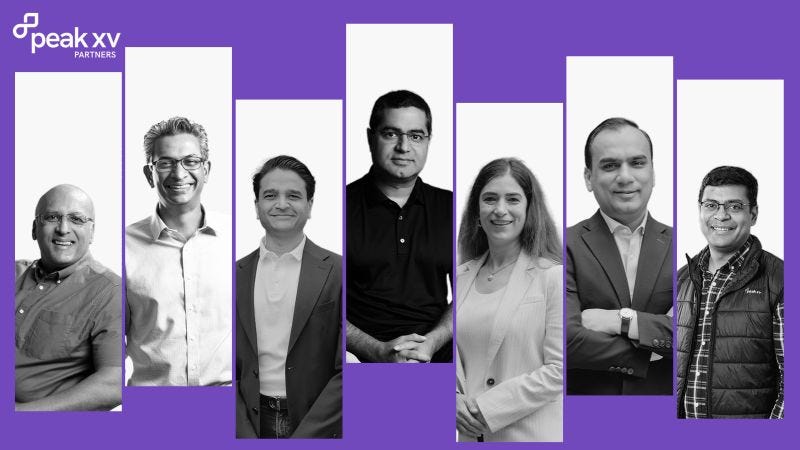
Peak XV Partners, which has lately been grappling with senior leadership attrition, raised its first independent funds since its separation from Sequoia Capital.
“We are pleased to announce the closing of $1.3 billion in new capital commitments across our India Seed, India Venture, and APAC funds,” the firm said.
AI will be a big focus for the new funds, both in the US and the Asia Pacific region, including India. Other big focus areas will be fintech and consumer, it said in a statement on Friday.
Motilal Oswal Alternates closed its fifth fund, India Business Excellence Fund V, at Rs 8,500 crore (approximately $939 million), shooting past the targeted Rs 6,500 crore. This is also the first time the firm has raised a sizable portion from offshore limited partners.
These include Adams Street Partners, Schroders, one of the funds managed by Neuberger Berman, International Finance Corporation (IFC), Oman Investment Authority, Axiom Asia and leading Japanese institutions.
Fund V has already invested 20% of its corpus across three companies including ethnic beverages retailer Lahori Zeera. It aims to invest $40-100 million in mid-to-late-stage businesses across sectors such as consumer, financial services, niche manufacturing and healthcare.
In a first of its kind, JM Financial Asset Management launched a Rs 1,500 crore (approximately $165 million) fund specifically targeting pre-IPO companies. The past couple of years have seen a record number of private companies go public, including a host of technology-related companies backed by PE investors.
“With over 1,600 registered AIFs and total commitments reaching Rs 15.05 lakh crore as of September 2025, the AIF industry is becoming a significant enabler of India’s capital formation,” JM Financial vice chairman Vishal Kampani said in a statement.
The Pre-IPO Alternative Investment Fund was recently cleared by markets regulator SEBI.
ValueQuest Investment Advisors, founded by public markets investor and former Rare Enterprises executive Ravi Dharamshi, raised Rs 1,500 crore for its rupee-denominated fund ValueQuest Tristar. It also activated its Rs 500 crore greenshoe option on strong interest from domestic limited partners. The fund is targeting growth investments in sectors such as precision engineering, aerospace and defence.
Among smaller funds, OTP Ventures, founded by former BharatPe CEO Suhail Sameer closed Fund I at Rs 500 crore, above the targeted Rs 400 crore. Sameer said in a social media post that while the fund received commitments worth Rs 750 crore, the firm decided to cap it at Rs 500 crore. The fund has a mandate to invest in consumer brands and platforms, and fintech at the seed and pre-Series A stages.
Domestic capital has emerged as a genuine anchor for India-focused fundraising — a welcome departure from the traditional reliance on offshore capital.
Even ChrysCapital, which raised $2.2 billion for Fund X last year, broke new ground by bringing in domestic institutional investors and family offices for the first time. Roughly 15% of the corpus came from domestic capital, according to media reports. At the same time, Motilal Oswal Alternate’s ability to split its latest raise between domestic and global limited partners is a reminder that offshore appetite for Indian private assets hasn’t waned.
The growing secondary market, which is beginning to create viable liquidity paths for investors, will reinforce that dynamic.
AI Summit
General Catalyst, Anthropic, Reliance in India AI Push
India put its best foot forward this week to assert its relevance in the global AI narrative. The India AI Impact Summit in New Delhi (February 17-21) served as a theatre for strategic and economic commitments from global technology giants, domestic conglomerates and government representatives.
Some of the private capital and private sector moves:
General Catalyst said it plans to invest $5 billion in India over the next five years. It will back startups across AI, healthcare and fintech among others.
Anthropic set up its India office in Bangalore, the second in Asia after Tokyo. India, the company said, is the second-largest market for Claude.ai. “Today, as we officially open our Bengaluru office, we’re announcing partnerships across enterprise, education, and agriculture that deepen our commitment to India across a range of sectors,” it said in a statement.
Reliance Industries and Jio committed $110 billion to build “India’s sovereign compute infrastructure” and the roadmap includes multi-gigawatt AI-ready data centres at Jamnagar. An initial 120MW of capacity is slated to go online later this year. The Adani Group also committed $100 billion.
Data centre company Yotta will invest $2 billion-plus on Nvidia’s Blackwell chips to build an AI computing hub, Reuters reported.
Qualcomm is setting up a Strategic AI Venture Fund to invest up to $150 million in startups. It will "support India's rapidly expanding technology and AI startup ecosystem, with a focus on AI for automotive, IoT, robotics and mobile," the company said in a statement.
The India Deep Tech Alliance allocated over $1 billion of the $2.5 billion committed capital from its members towards AI startup funding.
NVIDIA announced a partnership with Activate, a $75 million AI-focused venture capital fund launched in December by former Jio Haptik CEO Aakrit Vaish. “Activate startups will have direct access to NVIDIA technical expertise for co-building support including CUDA platform integrations, open source models like Nemotron, tools, libraries & SDKs,” Vaish said in a social media post.
The Week in Deals
ChrysCapital’s Latest Buyout; Blackstone Bets Big on AI

Buyouts aren’t common in India’s private equity market but that could change soon, led by India’s largest homegrown PE firm ChrysCapital. The week also saw more than its usual share of EV (electric vehicle) related deals, from charging infrastructure to design and manufacturing.
Novartis AG is selling a 70.68% stake in Novartis India, which is listed on BSE, to ChrysCapital for a total consideration of Rs 1445.89 crore ($159 million), according to regulatory filings.
ChrysCapital is making a mandatory open offer for an additional 26% stake.
Novartis India will be rebranded under a new name following the completion of the acquisition.
The transaction marks ChrysCapital’s first buyout in pharmaceuticals, a sector in which the PE firm has been a prolific investor but largely for minority stakes.
For Novartis AG, the divestment follows a strategic review of businesses kicked off by the Swiss pharmaceuticals giant in February 2024. The deal is part of a broader move to shed legacy generic units across geographies and focus on high-margin therapy areas such as oncology, cardio-renal metabolic and neurosciences.
“Novartis will continue its presence in India through Novartis Healthcare Private Limited (NHPL), a wholly owned subsidiary of the Novartis group in India. NHPL includes the commercial arm of Novartis in India, the Novartis Corporate Center in Hyderabad, and R&D teams…” Novartis AG said in a statement.
Novartis India has traditionally focused on branded generics for chronic ailments, including flagship pain relief brand Voveran.
Neysa, an AI infrastructure company, raised $1.2 billion in a equity and debt round. Blackstone and co-investors Teachers’ Venture Growth, TVS Capital, 360 One Asset and Nexus Venture Partners committed $600 million for the equity portion. Neysa will raise an additional $600 million in debt financing on the basis of the equity raise. The funding will be used to scale and deploy over 20,000 GPUs in India. For Blackstone, Neysa joins a global portfolio of AI infrastructure bets including QTS, AirTrunk, CoreWEave and Firmus.
Stable Money raised $25 million in a pre-Series C round led by Peak XV Partners. Existing investors Z47, RTP Global and The Fundamentum Partnership participated in the round. The startup, which enables individuals to invest in fixed income instruments such as fixed deposits and bonds through its digital platform, had raised a $20 million Series B about nine months ago. With the latest round, the total capital raised so far stands at $65 million, it said in a statement.
Statiq raised $18 million in a equity and debt round led by Tenacity Ventures. Y Combinator, Shell Ventures and RCD Holdings participated in the round. The EV charging infrastructure startup allows home and commercial users to locate and book EV chargers through its mobile app. It manufactures proprietary EV chargers and also aggregates existing public chargers.
Portkey raised a $15 million Series A round led by Elevation Capital. Existing investor Lightspeed, which entered at the seed stage in 2023, participated in the round. The San Francisco based startup, which has significant operations in India, offers enterprises a centralised control centre to run multiple generative AI models reliably, enabling them to track AI spends, fix errors on the go, and easily switch between AI models.
C2i Semiconductors raised $15 million in a Series A round led by Peak XV Partners. Yali Capital and TDK Ventures joined the round. The company is building power management solutions for AI data centres.
Vervesemi Microelectronics raised $10 million in a Series A round led by Ashish Kacholia and Unicorn India Ventures. Roots Ventures, Caperize Fina and MAIQ Growth Scheme participated in the round. The fabless semiconductor startup uses machine learning to design high-precision analog chips for the energy, automotive and healthcare industries.
Peptris, a drug discovery company that uses machine learning to accelerate the development of novel molecules, raised $7.7 million in a Series A round led by IAN Alpha Fund and Speciale Invest. Tenacity Ventures and BYT Ventures participated in the round.
HomeRun raised $6.6 million in a Series A round led by Sorin Investments. Existing investors Titan Capital and Sparrow Capital, and Consumer Collective by Atrium and Helios Holdings participated in the round. HomeRun is an on-demand marketplace for construction and home improvement materials.
Sub-$5 million deals: EV marketplace Turno raised an additional $4.7 million in a new funding round from existing investor British International Investment. Nutraceuticals D2C company Zeroharm Sciences raised $4.4 million from Kotak Alternate Asset Managers. EV maker Pluto Mobility raised $2 million in a seed round led by Version One Ventures. Wealthtech startup Otto Money raised $1.3 million in a pre-seed round led by Pravega Ventures. Edtech startup Beep raised $0.85 million in a pre-Series A round from Knowhere Ventures, Pacific Global Solutions and LeadAngels FLV.
Note: This is not an exhaustive list of deals and is based on information available in the public domain including company filings, press releases and reports published by media outlets.
Submit a deal for the Briefing at hello@therunwaynews.com.
Quickly before we go
Will AI take our jobs? It’s the most common question to ask these days. At interior design and furnishing company Livspace, it seems to have taken the jobs of at least 1,000 people according to a Moneycontrol report.
“As we look at the next phase of our growth, we are fundamentally reorganising… to become an AI-native agentic organisation… we’ve integrated advanced AI agents and automation across our core functions — sales, ops, design, and marketing,” a spokesperson for the KKR and Jungle Ventures backed company told the publication.
Have a good week ahead.
Thank you for reading The Runway. We’d love to get your feedback. Drop us a line.