


☕️ As an investment category in India’s PE-VC market, spacetech is still fairly small in terms of sheer dollars deployed. But it’s gaining momentum. What was primarily an early stage game just a few years ago is now shifting with the entry of later stage institutional capital. We explore what the accelerated deal flow in spacetech this year says about the sector. Welcome to Edition #47.
New to the The Runway? Subscribe for a comprehensive view of the deals, strategies and people shaping private equity and venture capital in India every week. Find us on LinkedIn and WhatsApp if you want to keep track of updates on future editions.
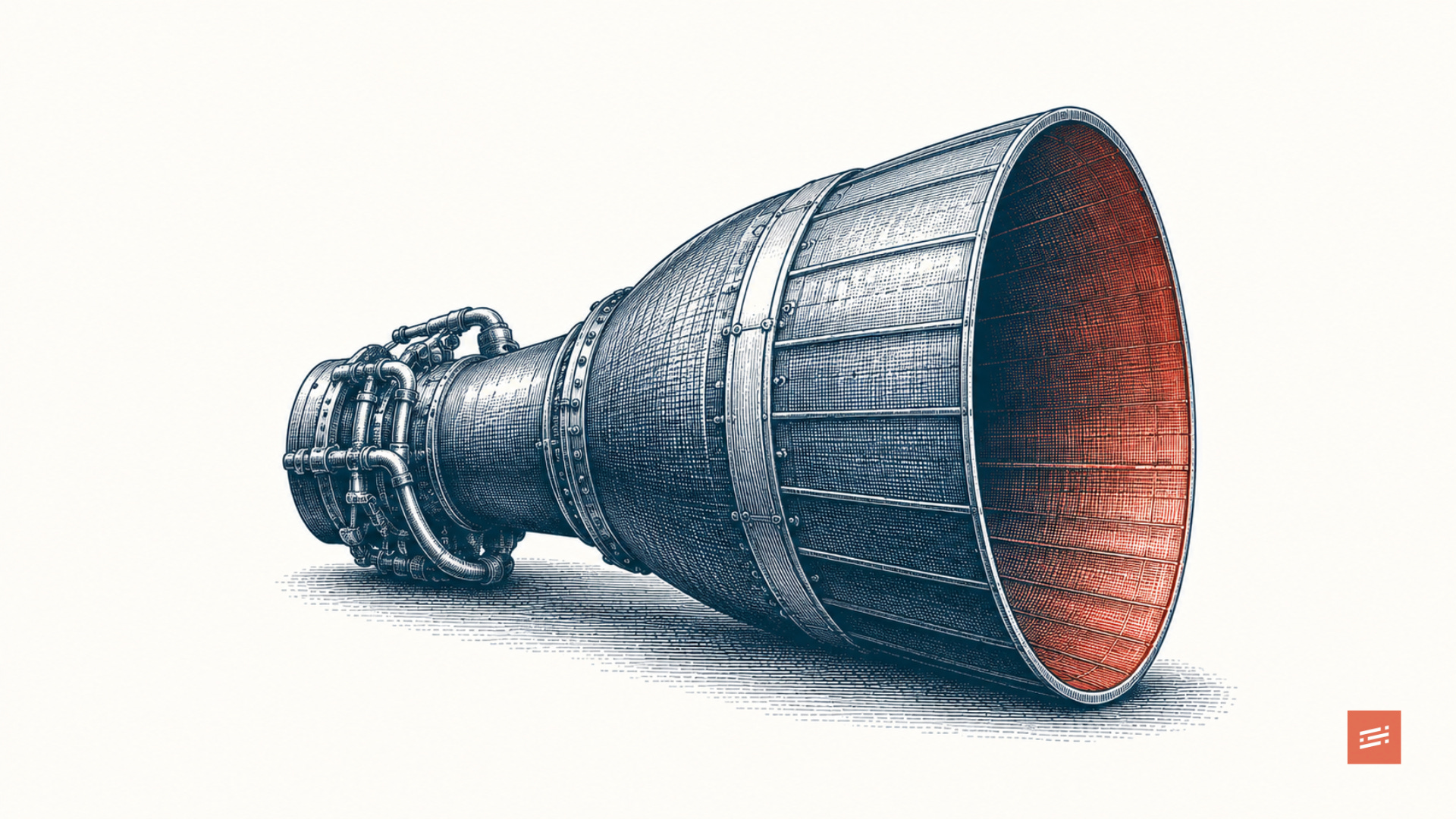
Over the past nine days, the rapid advance of private companies into India’s space programme has been under sharp scrutiny. Nine ISRO employee associations sought clarification from the national space agency’s chairman V Narayanan on the government’s plans to transfer manufacturing and operational functions to private entities – an exercise that has been underway for six years. The concerns were triggered by earlier remarks from Pawan Goenka, chairman of IN-SPACe, which promotes and regulates private participation in the space sector, that ISRO would eventually phase out routine rocket and satellite manufacturing.
Even as the government moved swiftly to allay concerns, private capital pushed deeper into the sector. Bangalore-based Pixxel closed a $100 million Series C round led by Singapore’s Temasek Holdings and British specialist spacetech investor Seraphim Space. This was the single largest funding round raised by an Indian spacetech company, taking the total capital deployed this year alone to over $300 million. The universe of private players now spans every layer of the space value chain from satellites and launch vehicles to ground infrastructure and surveillance.
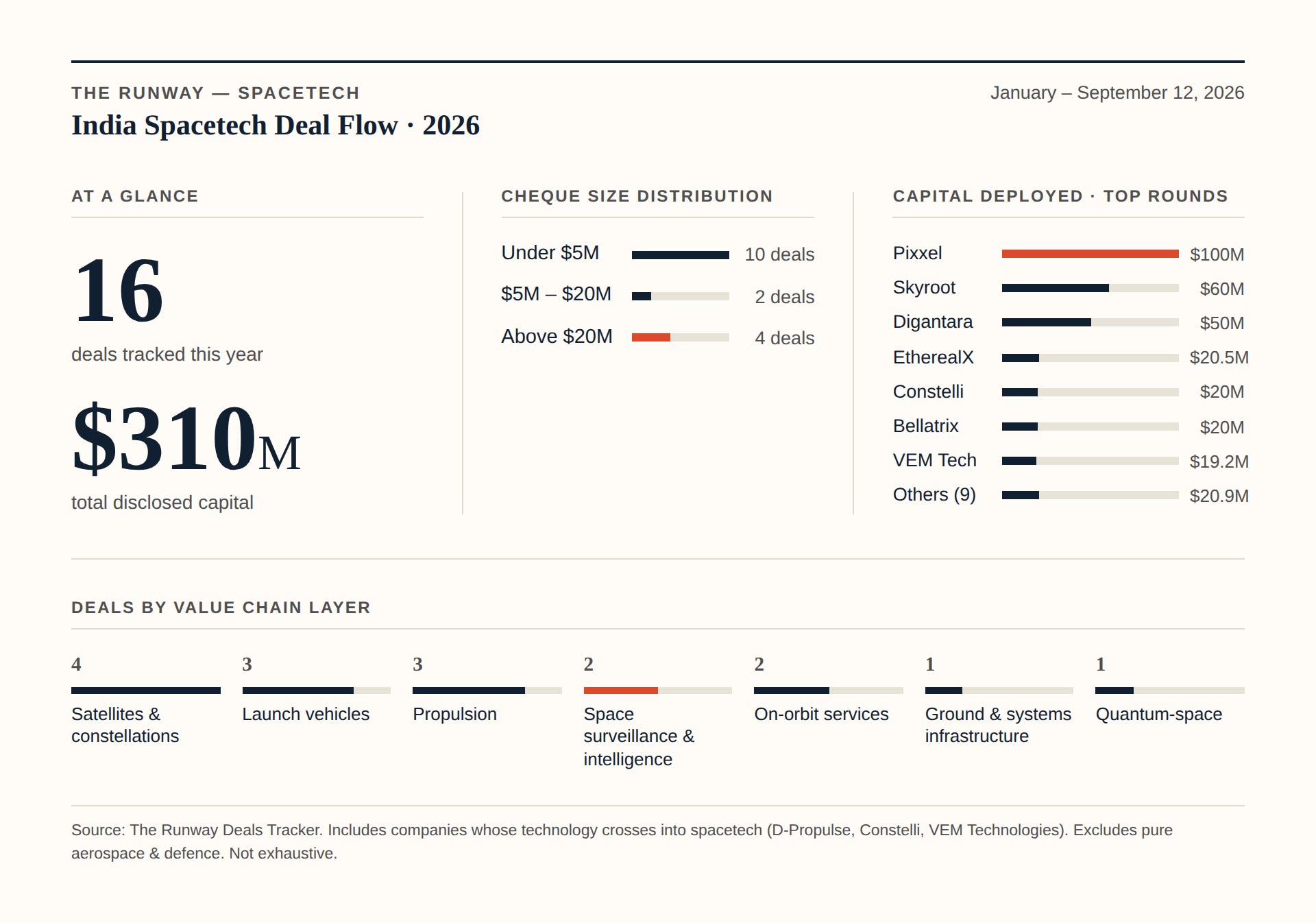
Pixxel, born in a BITS Pilani dorm room, exemplifies how India’s space programme has shifted in less than a decade. In August last year, IN-SPACe selected a Pixxel-led consortium, comprising Dhruva Space, PierSight and SatSure, to design, build and operate India’s first privately-led national Earth observation constellation of 12 satellites at an investment outlay of Rs 1,200 crore. The project will reduce India’s dependence on foreign satellite imagery and aims to enable applications such as precision agriculture, water quality monitoring, land-use mapping and disaster assessment.
Pixxel’s current operations comprise six Firefly satellites, launched in two batches, that capture hundreds of layers of the electromagnetic spectrum simultaneously, turning each image into a chemical map of the surface below. The company calls it a “health monitor for the planet.” It also has a contract with NASA under its Commercial Smallsat Data Acquisition programme and was awarded a contract by the US National Reconnaissance Office in May this year for hyper spectral remote sensing capabilities.
The Series C round, which also saw participation from 360 One Asset, IMM Investments, Radical Ventures and GrowX Ventures, will be deployed towards funding a next-generation Honeybee constellation, further development of Aurora, its Earth intelligence software platform, and expanded satellite manufacturing capacity in India and the US.
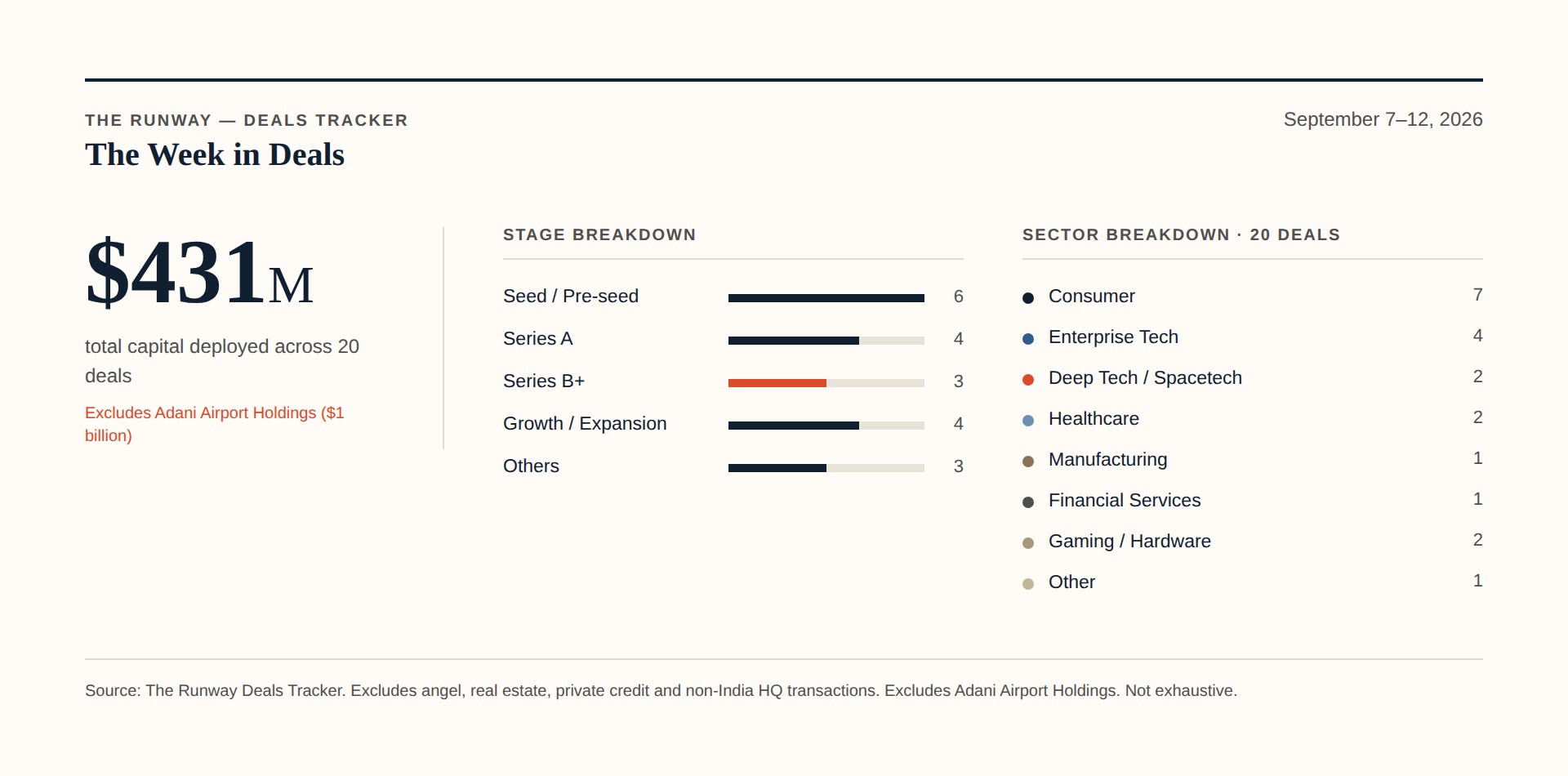
Including Pixxel, the week closed with 21-odd deals that saw private capital move into airports, workplace safety, hospitals, food, consumer brands, enterprise software and financial services. Excluding Adani Airport Holdings’ $1 billion haul, the remaining 20 companies raised a total of $431 million.
Also notable were three liquidity events. Let’s begin there.
→ Secondaries and Acquisitions
First up, women’s hygiene products maker Nua raised a $50 million Series C led by Peak XV Partners and Filter Capital. Existing investors Mirabilis Investment Trust and Footpath Ventures participated in the round which included primary and secondary capital. Early investors Kae Capital and Lightbox booked partial exits.
Kae said it realised an 18x MOIC (multiple on invested capital) on its Fund II stake from the partial exit in the Series C round. The Sasha Mirchandani-founded venture capital firm wrote Nua’s first institutional cheque, investing Rs 5 crore (about $0.8 million) in early 2018 in its seed round. The following year it joined the company’s $4 million Series A. In June 2021 it participated in the company’s $7 million pre-Series B round.
Mumbai-based Nua claims to be profitable on an annualised revenue run rate at Rs 500 crore. The latest round follows a Rs 35 crore ($4 million) pre-Series C led by Mirabilis in early 2025.
Kotak Alternate Asset Managers (Kotak Alts) took the M&A route, selling its stake in HKR Roadways to I-Squared Capital-backed Cube Highways, realising Rs 1,650 crore (about $173 million) and a 2x return on its Rs 800 crore ( approximately $108 million) investment, it said in a statement.
The PE firm, through its Special Situations Fund, had acquired a majority stake in HKR in May 2021. The asset, a 206 kilometer four-lane toll road in Andhra Pradesh operating under a BOT concession till 2021, had become non-performing after the company defaulted on debt. The turnaround involved completing capital expenditure, improving toll efficiency and restoring financial health, Kotak Alts partner Pratik Parekh said in a statement.
Singapore-based Cube separately acquired promoter Gayatri Highway’s 49% stake, completing the transaction earlier this month, according to a regulatory disclosure.
And in a potentially profitable outcome for Peak XV Partners, cross border payments company Tazapay is being acquired by Circle Internet Group, the NYSE-listed issuer of the USDC stablecoin, for $400 million in stock.
Peak XV Partners, which led Tazapay’s Series A (in 2023) and co-led its $36 million Series B, is among the early backers.
Singapore-based Tazapay provides cross border payments infrastructure across more than 100 markets. The company began integrating USDC settlements in 2025. Stablecoins now account for about 60% of its $25 billion annualised payment volume. For Circle, the acquisition plugs in the last mile delivery network – Tazapay’s banking relationships with over 60 institutions and on-ground infrastructure across more than 100 markets including Canada, Australia and the United States.
→ Premji Invest joins Adani Airport investor consortium
The big deal of the week was Adani Airport Holdings (AAHL), the airports business of Adani Enterprises, raising Rs 9,825 crore ($1 billion) from Alpha Wave Global, Premji Invest, Temasek and funds managed by BlackRock. The deal values the company at about $18 billion, pre-money, the company said in a regulatory disclosure.
The investors will subscribe to new shares in three stages and are expected to own a combined 5.54% stake on completion. The final tranche is expected to be completed by July 2027, subject to customary conditions and regulatory approvals.
The capital will be used to modernise and expand airports, develop about 22 million square feet of mixed-use projects around them in the first phase of the Adani Airport City programme, and expand ground handling and other non-aeronautical operations.
AAHL operates eight airports in India and handles more than 23% of the country’s passenger traffic, the company said.
→ Hospitals
Healthcare, especially regional hospital chains, has been getting a lot of attention from private equity lately. Marengo Asia Hospitals raised $40 million from LeapFrog Investments. The multi-specialty hospitals platform, backed by Samara Capital and the family offices of the Godrej and Havells groups, operates five hospitals across Gujarat and Delhi NCR with approximately 2,000 beds.
The deal expands LeapFrog’s healthcare investing thesis for Asia and Africa and comes on the heels of “recent investments in GCMC, a leading hospital chain in the Philippines, and Pharmacity, Vietnam’s second largest pharmacy retailer,” partner and global healthcare lead Biju Mohandas said in a statement.
Marengo has built its platform through a build-and-buy strategy, acquiring established regional hospitals and strengthening their clinical capabilities across cardiology, oncology and neurology. It also has a strategic partnership in Saudi Arabia. The company plans to double its bed capacity to 4,000 over the next two years, Samara Capital managing director and Marengo chairman Abhishek Kabra said.
→ Busy week for enterprise tech
San Francisco-based Lightsage closed a $4 million seed round led by Nexus Venture Partners. Executives and operators from the software and AI industries including former Salesforce CTO Steven Tamm, Postman CEO Abhinav Asthana, Apollo CEO Matt Curl and DocuSign president Robert Chatwani participated. It’s developing software that helps businesses measure and improve how AI agents find, assess and use their products.
QNu Labs, a Bangalore-based quantum-safe cybersecurity company that was incubated at IIT Madras, raised Rs 200 crore ($21 million) in a Series A1 round led by the National Quantum Mission and Speciale Invest. Sony Innovation Fund, Gaja Capital and Artha Ventures joined the round. QNu Labs builds quantum-safe cryptography products that are deployed across government, critical infrastructure and banking and financial services. The capital will go towards research and development, global go-to-market expansion and contribution to India’s Quantum Secure and Sensing Networks project under the National Quantum Mission, which has set a 2029 deadline for quantum-safe migration across sectors.
TrueFan AI, a video generation platform, raised an undisclosed sum from Bajaj Finance, the NBFC subsidiary of Bajaj Finserv, in lieu of a 5% stake. Gurugram-based TrueFan AI builds enterprise-grade personalised video generation tools that support more than 175 languages. It claims over 100 enterprise customers and over 8 lakh paid users. The investment follows an existing commercial relationship with Bajaj Finance which has deployed TrueFan’s platform for customer engagement and dealer communication. In June this year, TrueFan closed a $10 million Series A led by Baring Private Equity Partners India and Z3 Partners.
Digital Paani, which sits at the intersection of enterprise tech and climate-tech, raised $2.3 million in a round led by Navam Capital. Co-investors in the round included Enzia Ventures, Chakra Growth Capital, 3one4 Capital and Momentum Capital. The Gurugram-based water infrastructure software company combines real-time asset monitoring with AI-powered diagnostics to help utilities, municipalities and industrial users improve water recycling and automate maintenance decisions.
Fundly, which serves India’s pharmaceutical supply chain, raised $4 million in a pre-Series A round led by returning investor Accel (India) and Multiply Ventures. Venture debt firm Alteria Capital joined the round. The Mumbai-based company provides pharmacies and distributors with an integrated platform for ordering medicines, making supplier payments and accessing working capital credit.
Navana closed a Rs 40 crore ($4.2 million) Series A round led by upGrad co-founder Ronnie Screwvala. Antler India, Sharad Sanghi and Paula Mariwala were among investors who joined the round. The Bangalore-based startup builds voice AI infrastructure for the BFSI sector, with an emphasis on on-premise deployment for data privacy and compliance. Its Bodhi speech model covers 12 Indian languages and 45 dialects. Clients include Bajaj Finserv, Protean eGov Technologies and Ujjivan Small Finance Bank.
→ Industrial workforces
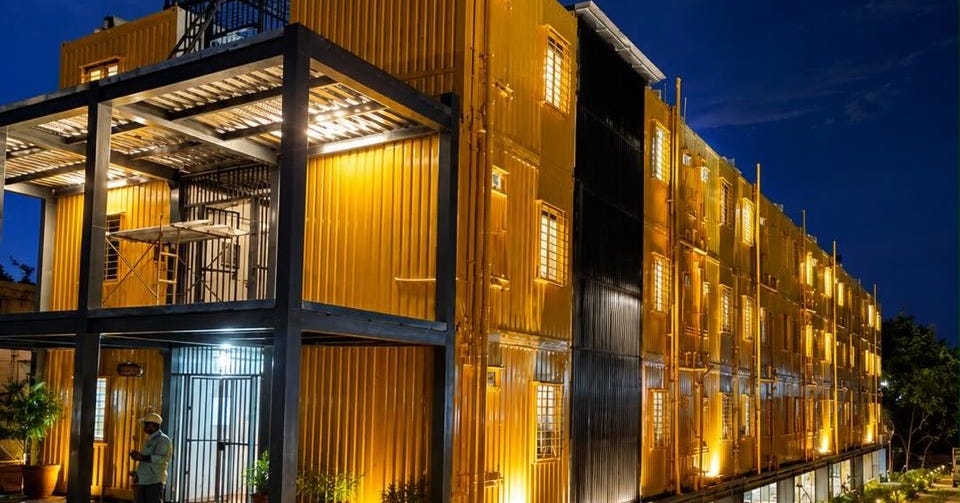
Two companies that address workforce safety and wellbeing at industrial sites raised big-ticket cheques.
HerSpace Manufacturing, a Bangalore-based startup that designs, develops and manages accommodation for industrial workers, raised $40 million from Gray Matters Capital. The startup deploys the modular units at industrial sites and provides services such as security, housekeeping, food and welfare.
Karam Safety raised Rs 600 crore ($63 million) from Motilal Oswal Alternates. The Noida-based workplace safety equipment company makes equipment such as helmets, footwear, respiratory protection and fall protection gear. Motilal Oswal Alternates invested from the India Business Excellence Fund V, for which it raised Rs 8,500 crore ($939 million) in February.
→ Other deals
Quick food delivery startup Swish raised $24 million in a new funding round led by Bertelsmann India Investments. Accel, Bain Capital Ventures and Hara Global were returning investors in the round, which came within six months of a $38 million Series B. The Bangalore-based startup makes fresh food available to consumers within 10 minutes. It claims to be serving over a million orders a month and the fresh tranche of capital will be used to expand its kitchen network and supply chain infrastructure.
Carrum Mobility raised $10 million in a Series B round from Uber. The Gurugram-based B2B fleet management company had raised a Series A round from Uber in January.
Quick service restaurant company Popo Global, known for gourmet restaurant brands The Pizza Bakery, Paris Panini and Smash Guys, raised Rs 532 crore ($55.6 million) from Artal Asia. Singapore-based Artal Asia, which operates in partnership with New York-based Invus Group, is an investment vehicle of Luxembourg-based Artal Group. The firm’s other investments in India’s food and consumer sector include Jumbotail, a B2B food and grocery platform, and Capital Foods (the company behind Ching’s Secret and Smith & Jones which was acquired by Tata Consumer Products).
Gaming hardware startup ARC raised Rs 10.5 crore ($1.09 million) in a pre-seed round co-led by gaming-focused early stage investor Chimera VC and MIXI Global Investments, the venture arm of Japanese gaming and social entertainment group MIXI. Meta (APAC) managing director Dhruv Vohra joined the round. The Bangalore-based company is building a handheld gaming device aimed at players underserved by existing hardware.
Iztri, an on-demand steam ironing service, raised $1.1 million in a seed round led by All in Capital and Suashish Group. A roster of angel investors including WhatsApp CEO Kunal Shah, Shaadi founder Anupam Mittal, YouTuber Tanmay Bhat, and the JK Tyre family office, joined the round. The Bangalore-based startup offers same-day delivery and claims to serve 25,000 customers across the city.
Lickicious raised Rs 19 crore ($2 million) in a mix of debt and equity. Prath Ventures led the round and ISV Capital participated. The Mumbai-based company sells food and nutrition products for dogs and cats.
Submit a deal for the weekly briefing by replying to this email or write to us at hello@therunwaynews.com.
Briefly
Former PAG executive Gauravjit Singh has joined India’s sovereign-anchored alternative asset manager Nation Investment and Infrastructure Fund (NIIF) to lead capital formation across investment strategies. Singh was head of investor relations and fundraising for PAG’s private equity division in Singapore. His prior stints include True North and KKR. Mumbai-based NIIF is currently raising its Infrastructure Fund II and recently announced the fund’s first close at Rs 19,000 crore ($2 billion), more than 60% of its targeted Rs 30,000 crore ($3.2 billion) corpus.
Healthcare-focused W Health Ventures closed Fund II at Rs 700 crore ($74 million), exceeding its initial target of Rs 630 crore, it said in a statement. The new fund will expand what the firm dubs its “company creation model” which involves identifying structural gaps in the healthcare delivery domain, pressure-testing the opportunity for 12-18 months and recruiting a founding team to build and scale the venture. It aims to build 8-10 such companies, both in India and in the US-India corridor, over the next four years. Fund II has already backed two companies – patient-centred oncology care startup Everhope Oncology, founded with Narayana Health, and mental health focused startup Everbright Health.
Have a nice weekend.
Thank you for reading The Runway. We’d love to get your feedback. Drop us a line at hello@therunwaynews.com or just reply to this email.