


Sumant Sinha has been trying to take his renewables company private for nearly two years. He may finally have a deal that gets him home. Also, electric mobility leads dealmaking again; new funds that closed; and a mega move for AI buildouts. Welcome to Edition #43.
New to the The Runway? Subscribe for a comprehensive view of the deals, strategies and people shaping private equity and venture capital in India every week. Find us on LinkedIn and WhatsApp if you want to keep track of updates on future editions.

Canada Pension Plan Investment Board (CPP Investments) is leading a fresh bid to take one of India’s largest renewable energy companies private.
CPP Investments and ReNew founder Sumant Sinha signed a definitive agreement on August 11 to acquire all shares of Nasdaq-listed ReNew Energy Global not held by the consortium.
The transaction values the company’s fully diluted equity at $2.8 billion and implies an enterprise value of $10.2 billion, regulatory disclosures showed. Non-consortium shareholders will receive $7.02 a share in cash, a 24.7% premium to the one-month volume-weighted average price of $5.63 a share for the period ended May 28, 2026.
The scheme is expected to become effective in the first quarter of 2027, subject to shareholder and regulatory clearances.
Non-consortium shareholders have the option to either take the $7.02 a share in cash or roll over their stakes into the private company. Among those, Abu Dhabi Investment Authority (ADIA) and Japan’s JERA Co have agreed to vote in favour of the scheme and roll over their stakes. Indian residents will not be able to participate in the rollover and can only take cash. If the total number of remaining shareholders post-rollover exceeds 200, smaller holders will revert to cash.
This will be Gurugram-based ReNew’s second major bid to go private. In December 2024, a broader consortium comprising new investor Masdar – the UAE-based clean energy company owned by the Abu Dhabi National Oil Company, Mubadala Investment Company and Abu Dhabi National Energy Company PJSC) – and existing shareholders CPP Investments, ADIA and Sinha had submitted a non-binding proposal at $7.07 a share. The deal collapsed a year later when Masdar decided to pull out.
Sinha and CPP Investments regrouped and submitted a fresh proposal in May this year at $6.75 a share, which was raised to $7.02 a share in July.
Why ReNew is going private
Gurugram-based ReNew listed on the Nasdaq in August 2021 through a SPAC merger with RMG Acquisition Corporation II at an equity value of $4.4 billion and an enterprise value of $8 billion. The stock has largely underperformed since listing, trading as low as $4.04 a share in early 2023. It is currently trading at around $6.81 a share, close to the offer price of $7.02 a share.
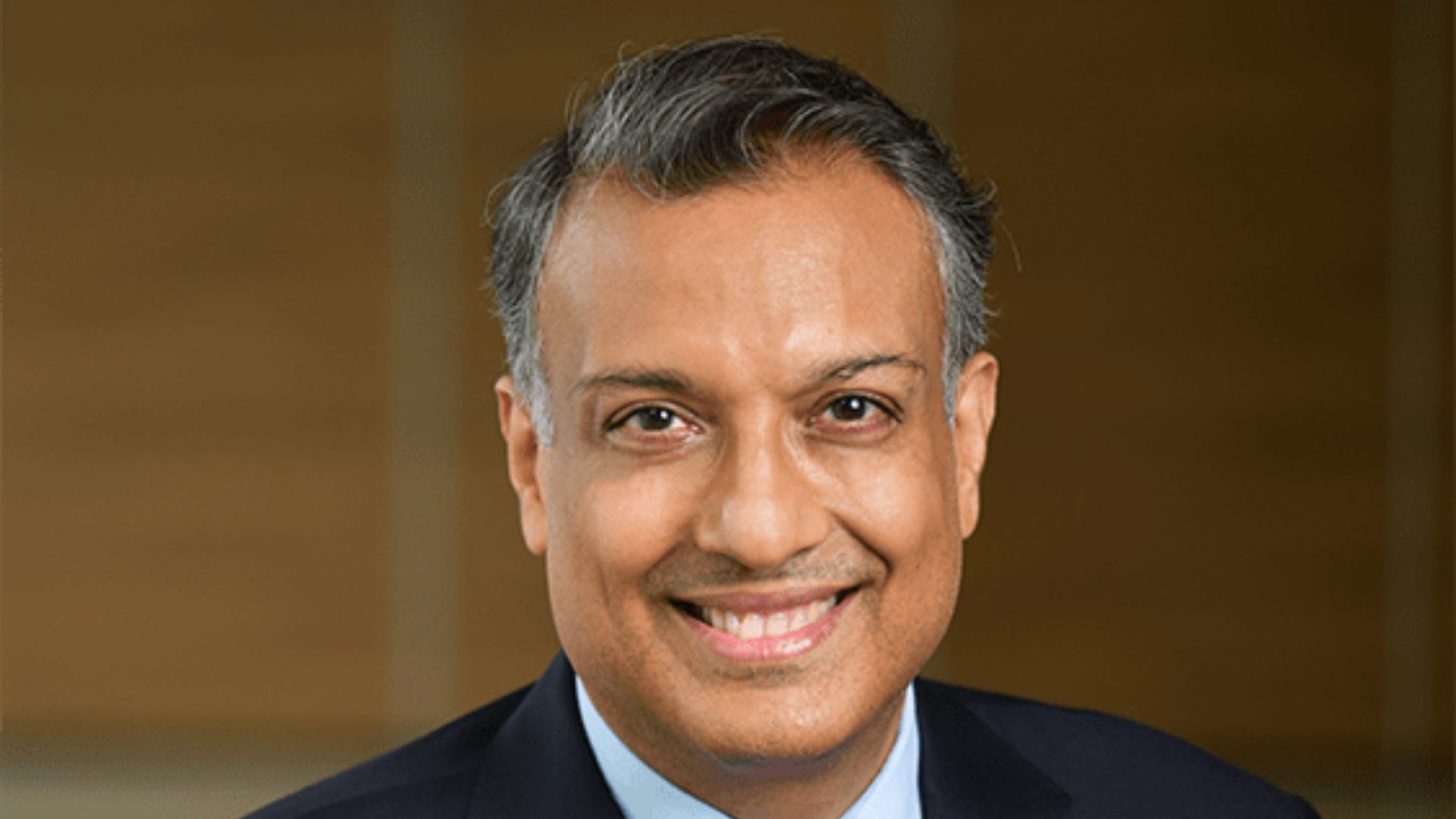
In December 2024, when the Masdar-led delisting bid was in play, Sinha told the Financial Times in an interview that the markets were undervaluing renewable energy companies and hampering the green transition. Speaking to CNBC-TV18 at Davos this January, he was more direct, pointing to compounding headwinds including the US Federal Reserve’s rate hike cycle, the withdrawal of capital from sustainability funds, and inadequate understanding among investors of the context in which the company operates. “Our sense is that it’s probably better to just not be listed there,” he said.
Asset sales ahead of delisting
Separately, a day before its filing on the take-private scheme, ReNew sold 1,055 MW of solar assets in Rajasthan and Karnataka to Purvah Green Power, a subsidiary of RP-Sanjiv Goenka Group owned CESC at an enterprise value of Rs 5,080 crore ($532 million), an August 10 filing showed. This includes a Rs 230 crore ($24 million) earn-out contingent on change-in-law orders being granted.
The sale is one of a series of asset transactions the company has committed to execute ahead of the closing of the take-private offer.
These include the divestment of transmission assets, solar asset sales totalling over 1,655 MW across multiple Solar Energy Corporation of India projects, a capital raise in the commercial and industrial business and the sale of a stake in the manufacturing arm.
The company is selling mature, contracted assets that generate stable, predictable cash flows to reduce its debt load and free up capital to finance the next generation of projects.
Beyond wind and solar
In its next phase, ReNew is looking beyond traditional solar and wind energy generation. The filing identifies three new business initiatives. The first is a 1 GW pumped hydro storage project under a Uttar Pradesh Power Corporation tender with a 40-year power purchase agreement. The second is a green hydrogen project with a 2,000 tonne per year capacity under a Chennai Petroleum Corporation tender on a 25-year build-own-operate basis. The third is 200 MW of data centre capacity. In addition, the business plan includes a 6.5 GW solar wafer-ingot manufacturing facility.
The CPP Investments-led consortium agreement requires the board, within 12 months of the scheme becoming effective, to begin preparing for a listing on a recognised stock exchange. An Indian listing is the most likely destination. But Sinha stopped short of committing to it at Davos in January.
For now, ReNew must first complete the task at hand – going private in the US.
The Week in Deals
GEF Backs Yulu; Premji Invest Joins Databricks’ $5B Round
From enterprise technology and electric mobility to wealth management and medical devices, what private market dealmaking missed this week in volume terms, it made up for in the diversity of bets.
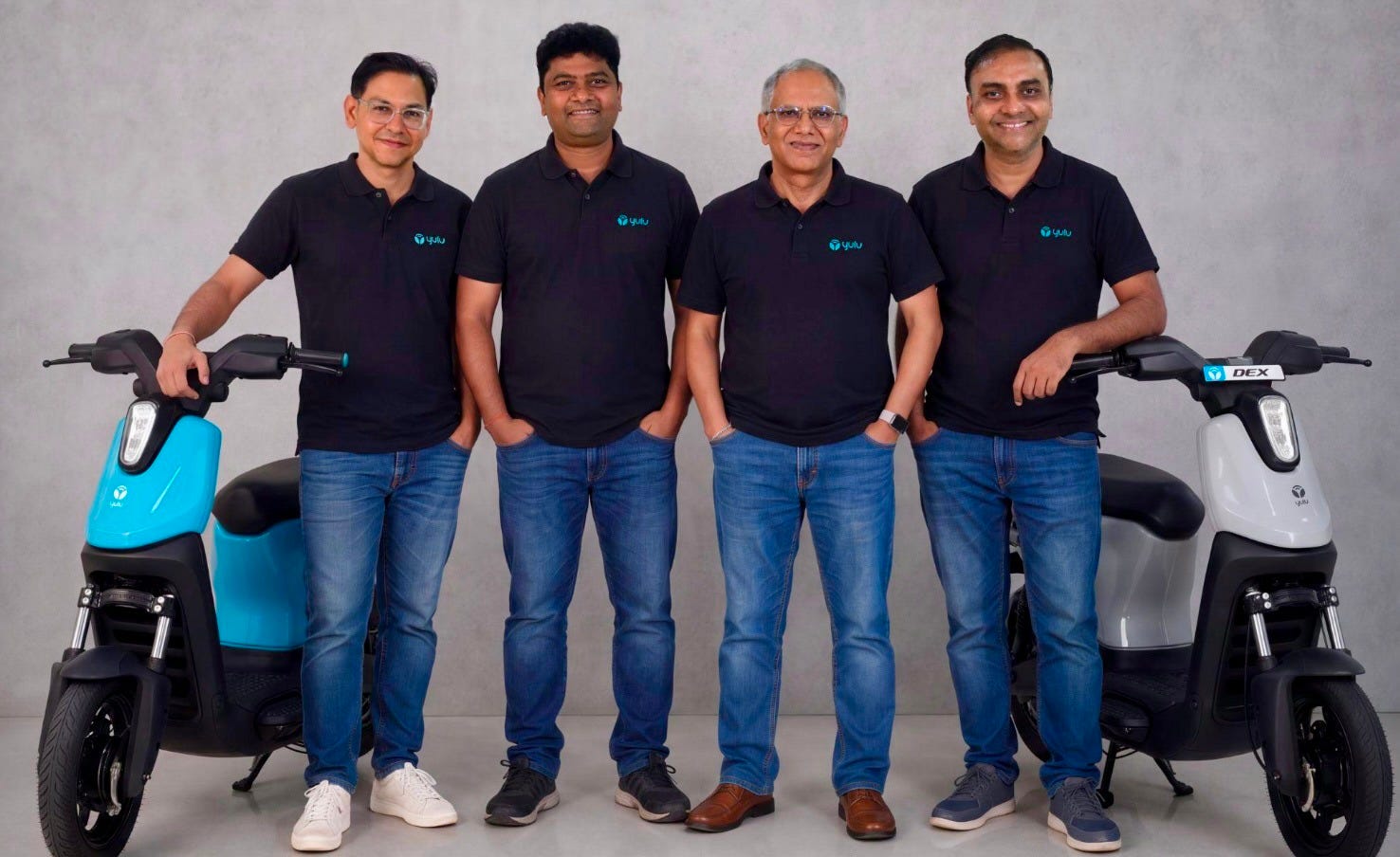
Electric mobility scored again. Bike rental platform Yulu closed a Series C round at $93 million led by GEF Capital Partners. The equity and debt round involves a $63 million equity portion, the company said in a statement. The round valued the company at $170 million, post-money, TechCrunch reported.
The Series C capital will be used to grow its fleet to 20,000 vehicles within the next two years and expand service hubs. It’s also entering the intra-city mobility market with the launch of Yulu Express, a full-sized, long-haul electric scooter built for ecommerce logistics, bike taxis and express parcel delivery, the statement said.
The Bangalore-based company last raised equity capital in 2024 when existing investors Magna International and Bajaj Auto invested $19.2 million in a bridge round. This followed a $82 million Series B led by Magna International in 2022. Bajaj Auto got on board as an investor in 2019.
Investor interest in electric mobility has been on an upswing this year with 14-odd companies across the spectrum raising 700 million so far.
In offshore funding deals, Peak XV Partners, Lightspeed India, Premji Invest and Titan Capital put money to work across the technology spectrum.
Blacksmith, a software infrastructure company, raised a $45 million Series B round led by Peak XV Partners. Y Combinator and GV (Google Ventures) were return investors in the round which valued the startup at $550 million. The round closed in March but was disclosed this week. The San Francisco-based company sells faster, cheaper computing infrastructure to software engineering teams whose automated testing pipelines are straining under the weight of AI-generated code.
Discovered Materials, a San Francisco-based startup building AI agents to find new materials for semiconductor chips, raised a $9 million seed round led by Lightspeed (India fund). Y Combinator and Peak XV Partners joined the round alongside angel investors Paul Graham, Gokul Rajaram and Thariq Shihipar.
Premji Invest joined Databricks’ $5 billion funding round led by Coatue, Blackstone, MGX, T. Rowe Price and Sixth Street Growth. The San Francisco-based company is a cloud-based data intelligence platform built on a “lakehouse” architecture.
Wipro Ventures joined Skan AI’s $63 million round, which was led by Cathay Innovation and Dell Technologies Capital. The Menlo Park, California-based company uses AI to observe how employees work across software systems and maps workflows to improve, automate and deploy AI agents.
Titan Capital and Neon Fund co-led a $1 million round in San Francisco-based market research platform Echovane.
Centricity raised Rs 280 crore ($29 million) in a Series A round led by SMBC Asia Rising Fund. Returning investors in the round included Lightspeed Venture Partners, Burman Family Holdings and RAAY Investments, the Amit Patni Group’s family office. The Gurugram-based company offers wealth management services to affluent individuals and family offices.
NDR Smart Spaces, an arm of the NDR Group, raised Rs 225 crore ($23 million) from World Bank affiliate International Finance Corporation. The Chennai-based company is developing 20 million square feet of warehousing infrastructure across 14 cities.
Sub-$5 million funding deals: Home cleaning products maker Scrubsy raised $3 million from V3 Ventures. Diabetes-focused medical devices maker Ayati Devices closed a $1.57 million pre-Series A round led by Inflexor Ventures. Voice AI company Wippi raised $1.2 million in a seed round led by 12 Flags. Driving intelligence platform Lane raised $0.9 million in a pre-seed round led by Kae Capital. Financial services sector-focused enterprise technology startup Vecton AI raised $0.6 million in a pre-seed round from Zeropearl VC. Surface care products maker Invisel raised $0.4 million in a seed round led by IAN Angel Fund.
Submit a deal for The Runway Briefing by replying to this email or write to us at hello@therunwaynews.com.
Briefly
Zetwerk filed updated IPO papers, moving closer to a public listing. The Bangalore-based company, which runs a managed marketplace for contract manufacturing, aims to raise Rs 2,600 crore ($272 million) through a fresh issue, alongside an offer for sale (OFS) of up to Rs 96.8 million shares.
Selling shareholders include Peak XV Partners, Accel India, Lightspeed Venture Partners and KAE Capital. Founders Amrit Acharyra and Srinath Ramakkrushnan are also selling, offering 51.4 million shares, which works out to roughly 53% of the OFS.
The bulk of the IPO proceeds, Rs 1,800 crore, will go towards repaying debt. The company’s consolidated borrowings stood at Rs 4,607 crore as of May 2026. It also plans to raise up to Rs 520 crore through a pre-IPO placement.
Founded in 2018, Zetwerk reported revenues from operations at Rs 15,913 crore in FY2026 against Rs 11,332 crore in FY2025. The company posted a restated loss of Rs 1,606 crore in FY2026, weighed down by debt servicing costs, depreciation and charges from businesses it is winding down. Adjusted EBITDA, however, was positive at Rs 421 crore.
South Korean conglomerate Mirae Asset Global Investments’ India venture capital arm Mirae Asset Venture Investments (India) raised Rs 1,125 crore ($117.8 million) in the first close for its new fund. Mirae Asset Venture Opportunity Fund II (MAVOF II) aims to raise a total of Rs 1,800 crore ($188.6 million). Krafton and Naver-backed Unicorn Growth Fund, launched in April this year to back startups in India, is an anchor investor in MAVOF II.
The target corpus is a significant expansion from MAVOF I, raised in 2021, with a Rs 370 crore corpus. MAVOF II will back companies in technology, including deeptech and AI, consumer discretionary and manufacturing at the Series B through D stages, Puneet Kumar, CEO at Mirae Asset Venture Investments, said in a statement.
Also, Bluehill VC closed its maiden fund at Rs 400 crore to back frontier technology companies. And, Accel raised a $550 million new India fund, it’s ninth for this market, as part of larger $3.5 billion global fundraising exercise.
NVIDIA is betting on Wall Street bankrolling the AI buildout. It announced this week that it has signed memorandums of understanding with six of the world’s largest alternative asset managers. Apollo, BlackRock, Blackstone, Brookfield, Goldman Sachs and KKR will establish independent financing platforms with the stated aim of mobilising more than $500 billion in third-party capital for AI infrastructure over an unspecified timeframe.
Each platform will work with NVIDIA to create dedicated capital pools for its customers including frontier AI labs, enterprises and AI cloud operators at what the company described as “attractive rates.”
The capital requirements of AI buildouts are humungous. In March this year, Morgan Stanley Research estimated global data centre construction costs at $2.9 billion. Of that, $1.4 trillion is expected to be spent by hyperscalers (Google, Meta and Amazon) for their internal buildouts. The bulk of the remaining $1.5 trillion is expected to come from private investors, credit and equity capital. NVIDIA’s argument is that compute should be treated as infrastructure the same way that roads and power grids are – long duration, productive, investible assets.
Alternative investors seem to have bought into the argument. Whether that will play out as anticipated or blow up into a credit bubble, as DealBook’s Andrew Sorkin frames it in his newsletter, remains an open question.
See you next week.
Thank you for reading The Runway. We’d love to get your feedback. Drop us a line at hello@therunwaynews.com or just reply to this email.