


☕⚡Good Afternoon! Welcome to Edition #1 of The Runway.
With nearly $3 billion raised by India-specific venture capital funds since January this year – well past the total capital raised in all of 2024 – it’s easy to assume that venture capital in India has emerged from the downturn that ravaged the ecosystem for nearly two years. But zoom out and the reality is quite different, even sobering.
Over 70% of the capital raised this year is concentrated in four large funds: Accel India VIII ($650 million), A91 Partners III ($665 million), Elevation Holdings ($400 million), and Bessemer India II ($350 million). The concentration is telling – global limited partners (LP) are comfortable backing established generalists, doubling down on proven fund managers rather than spreading bets across the market. These funds can tweak mandates to suit emerging themes like AI or new-age consumer businesses without abandoning scale.
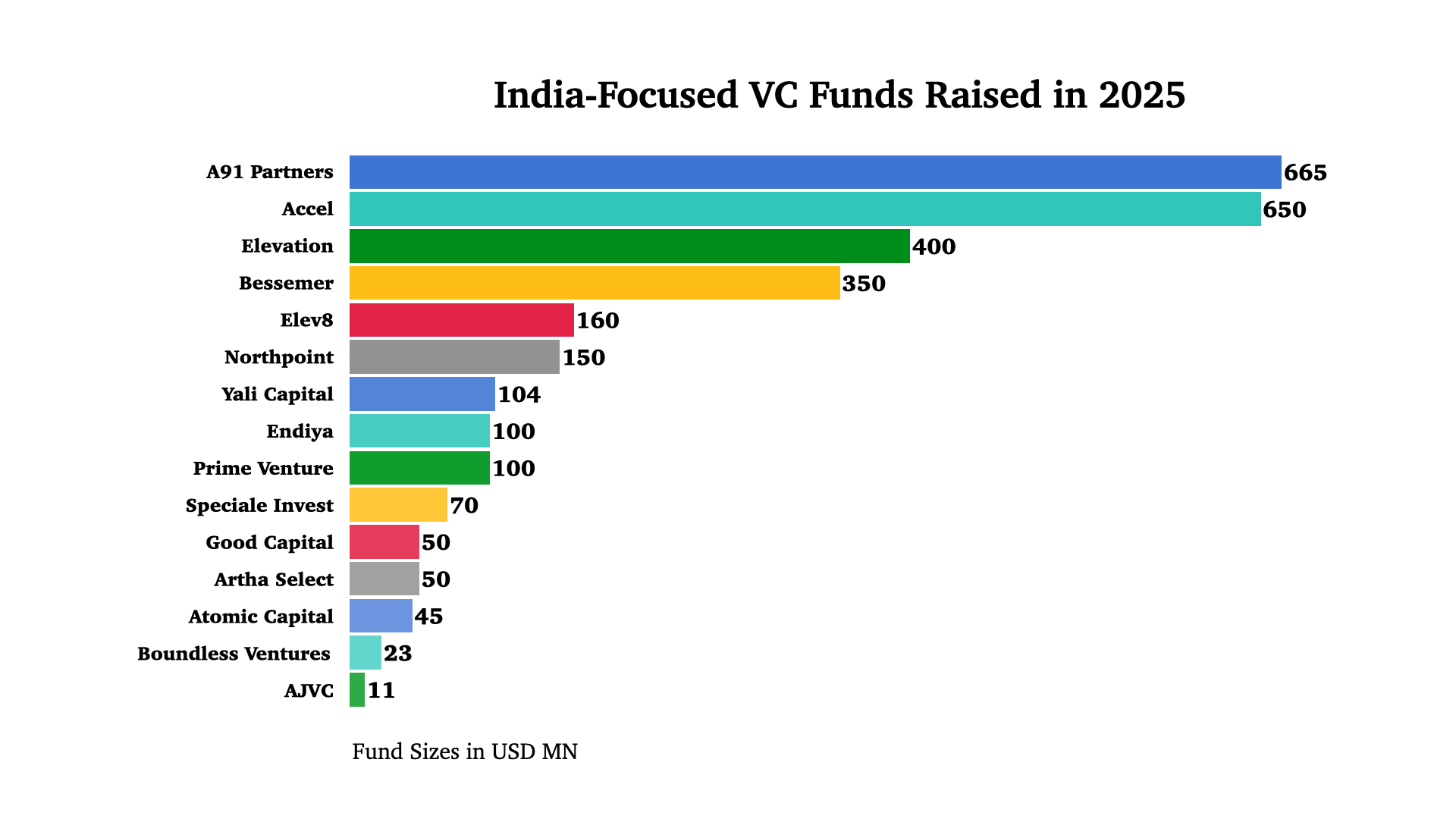
While global LPs exercise caution – an outcome of weak distributions from prior funds – domestic LPs, specifically homegrown family offices, are now squarely on the radar of local fund managers. This is evident from a bunch of first-time funds that have raised capital from a mix of offshore and local LPs. This week, former KAE Capital partner Navin Honagudi’s Elev8 Venture Partners closed its debut $160 million fund (below its targeted $200 million), anchored by South Korea’s KB Investments, with domestic LPs making up about half the corpus. Northpoint Capital, founded by former Nexus Venture Partners managing director Sameer Brij Verma, which raised $150 million, is another example.
The pattern extends further. Yali Capital and Boundless Ventures (both debut funds), along with Endiya Partners, Prime Venture Partners and Speciale Invest (each raising $100 million or less), have leaned on domestic LPs while sharpening their theses around deeptech, AI, and enterprise software.
Domestic money isn’t a free lunch, though. Family offices come with tough pre-conditions: higher GP commitments and right-sized funds.
“We ask GPs to commit as much as 20% of the fund corpus,” an executive at a Delhi-based family office that has backed about half a dozen funds told me.
The big concern, for offshore and local LPs alike, isn’t the headline-grabbing raises — it’s the long tail. Many small and mid-sized funds raised in prior cycles are now stuck with largely illiquid portfolios. They’re not failing outright, but they’re not thriving either. “Too many (fund) managers are living off management fees, chasing AUM step-ups without the operating capacity to match,” the executive cited above added.
Industry estimates suggest that since 2010, over $500 billion has flowed into India’s private equity and venture capital markets, but exits worth less than $250 billion have been realized. That gap underscores the recycling problem: too much capital drawn down, too little returned.
“If you look at the 2016–2018 vintage, the problem is obvious. You have GPs with thin benches, stretched teams, and portfolios built at peak valuations that no longer hold. It’s a minefield for LPs,” says a fund manager at a Mumbai-based family office focused on consumer businesses.
For LPs, especially global ones, the worry is inertia. These funds may not collapse, but without liquidity events or refreshed strategies, they tie up capital without reshaping markets.
That reality will inevitably weigh on the next cycle of fundraising. Based on media reports, around 15 funds have achieved a final close so far this year. Another 30-odd are still in the market, spanning established managers like Nexus Venture Partners, Peak XV, Z47, and Fireside Ventures — all preparing to step up their AUMs — along with a mix of first-time funds and micro-VCs.
For LPs, especially the family offices moving up the stack, the bar is clarity: what’s your edge, where does it show up in sourcing and support, and how, specifically, does this fund get liquid?
That’s where the compounding begins again.
🗞️ In Brief
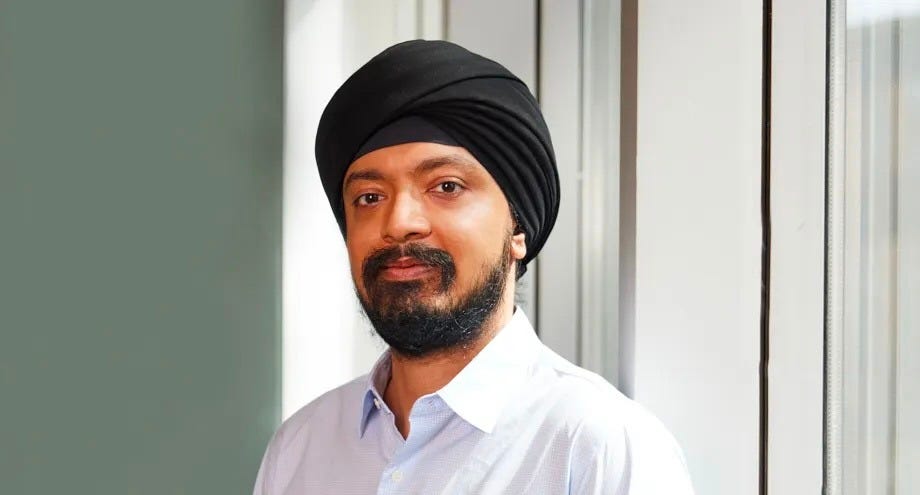
Peak XV Partners’ attrition problems, post its separation from Sequoia Capital, continue. Managing director Harshjit Seth is the latest senior executive to depart from the firm, ending a 12-year stint that has seen him involved in investments in several leading startups including BharatPe, Sarvam AI and Darwinbox. Earlier, in February, the firm lost managing directors Shailesh Lakhani and Abheek Anand. Other prior senior exits include Piyush Gupta and Shweta Rajpal Kohli. Late last year, under pressure from LPs, Peak XV cut its $2.8 billion India and Southeast Asia fund by 16%, and reduced management fees and carry to 2% and 20% respectively.
IPOs by PE/VC backed companies have picked up momentum again. Urban Company, the poster child of India’s booming convenience economy, is slated to tap the bourses next week (September 10) targeting a Rs 1,900 crore raise. Apart from the founders, the big winners in this outing include Accel, Bessemer Venture Partners and Elevation Capital. Homegrown wearables makers boAt, which filed its draft IPO papers confidentially earlier this year, has also been given the go-ahead by markets regulator SEBI. Also in queue is eyewear retailer Lenskart which filed papers in August.
Recco

NYUCT Labs’ recent speculative design exercise on the defunct HMT Watches will pique the interest of those of us who love watches. The Mumbai-based venture design firm is exploring what an HMT revival could look like, and what it would take to get there.
With their simple but rugged mechanicals and mid-century aesthetics, vintage HMTs afford an unvarnished pleasure compared to luxury Swiss timepieces, and it is not uncommon to find a Janata or a Pilot alongside Rolex Submariners and Omega Speedmasters in enthusiasts’ watchboxes. NYUCT Labs thinks there is a business case to be made for the revival and hopes to start a conversation that can be heard in the right quarters — including private investors.
The watch industry is not unfamiliar terrain for PE/VC firms globally. Some have stepped in to resuscitate ailing brands alongside passionate entrepreneurs — Breitling under Georges Kern comes to mind — or to back pre-owned marketplaces such as Chrono24 and, more recently, The 1916 Company.
HMT, however, is a different ball game. Can a government-owned brand with immense cultural resonance be turned into a viable play?
That’s something to consider the next time you wind up your Janata.
Thank you for reading The Runway. We’d love to get your feedback on how we could do better. Drop us a line and stay tuned for the next edition.