


☕️ Another homegrown hospital chain scooped up mega bucks. A global consumer private equity (PE) firm bet on local cuisine. The circular economy got a leg-up and AI-focused deals showed up as usual. Also, opening this edition, a conversation with Kae Capital’s Sunitha Viswanathan on the firm’s recent Nua exit and Kae’s broader consumer thesis.
Welcome to Edition #48.
New to the The Runway? Subscribe for a comprehensive view of the deals, strategies and people shaping private equity and venture capital in India every week. Find us on LinkedIn and WhatsApp if you want to keep track of updates on future editions.
Kae Capital’s Viswanathan: ‘Our asymmetric outcomes have typically come from super tough markets’
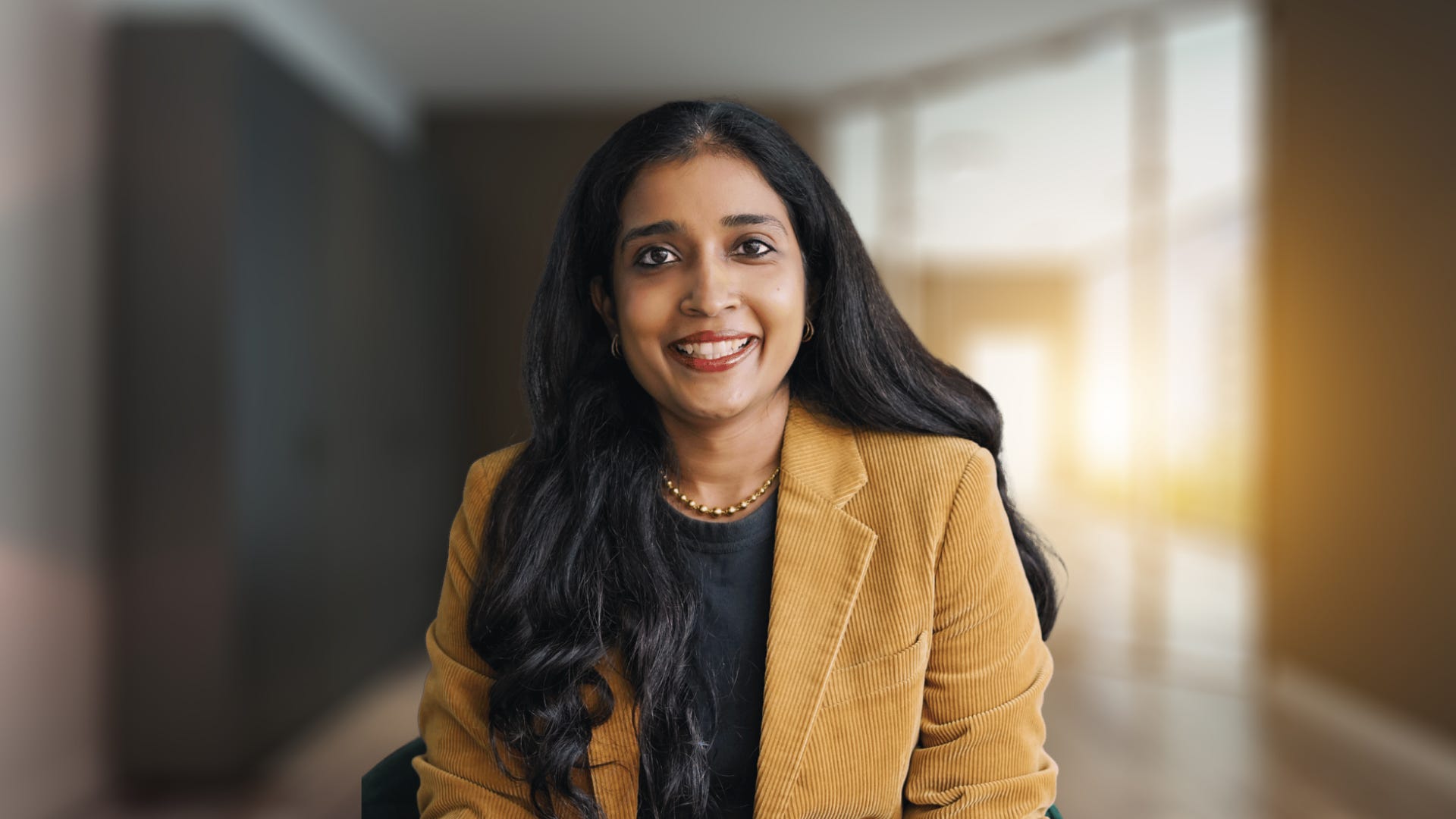
When Nua picked up a $50 million Series C cheque last week, the deal created a partial exit for the startup’s earliest backer, Kae Capital. For the Mumbai-based venture capital firm, it was both a bet on premium consumption becoming a defining pattern and the belief that menstrual care was ripe for disruption.
Kae partner Sunitha Viswanathan, who leads investments in fintech, consumer-tech and D2C, spoke to The Runway about the journey with Nua and what the firm’s consumer thesis looks like today.
The Runway: Even today, menstrual care is a tough category to break into. There are large, established players who dictate pricing and distribution. You wrote Nua’s first institutional cheque (Rs 5 crore) nearly eight years ago. What was so compelling about the company?
Sunitha Viswanathan: Let me first set the context on how we thought about investing in consumer businesses at the time.
It starts from our first fund ($25 million raised in 2012) journey. Premium domestic consumption was one of the larger themes that we believed would define the decade. That’s how we invested in 1mg and Healthkart. When we got to Fund II ($53 million in 2017), the opportunity had become even more interesting. Aspirations had grown. Disposable incomes had increased. We looked for spaces that were low on innovation or disruption but had high potential for repeat buying behaviour. And, there’s nothing better than women’s menstrual hygiene if you catch someone young.
There had been zero innovation. What mothers bought was pretty much what their daughters bought. Which wasn’t the case in skincare, beauty and personal care.
But we believed that it was a market that was ripe for disruption. Now whether it would happen in four years or six years, we didn't know. We did know that it was a super tough market. But at Kae, our asymmetric outcomes have typically come from super tough markets. Porter was not an easy market. Nor was HealthKart. Nua was treading the same path.
Ravi (Nua founder Ravi Ramachandran), for us, was a very special founder. For a male founder to stand up and say I want to do something in women’s menstrual care is non-trivial. For us, it was a strong indication that he was in it for the long term. Not because it sounds cool. Because there’s nothing cool about what he was setting out to do.
TR: The first cheque was followed by more, across rounds. At what point did you know that you’d be writing bigger cheques?
SV: Typically when we put in the first cheque, the going-in assumption is that we are allocating reserves for the company at least to a Series A, sometimes Series B. With Nua, one thing that kept coming back very clearly was that every woman I met, if she knew that we were investors in the company, the first reaction was, “Wow! I love them.” This could even be peers in other funds. There’s no reason for them to have to say that. There was clear brand recall and love. That was a leading indicator that there was something getting built with customers.
We invested in subsequent rounds from Fund II and from the Winners Fund (Kae participated in Nua’s $4 million Series A in 2019 and the $7.1 million pre-Series B in 2021). It was also a matter of ensuring that Ravi had the capital to see through the tough times. Take COVID, for instance. At the onset of COVID, a lot of the raw material was getting imported and inventory was becoming a problem. We had just started to shift our production capacity to India and we obviously had to accelerate. That meant he needed more capital. So we did what we could through our networks.
We knew this would turn around at some point. Which it did. Quick commerce was a great enabler in accelerating discovery. Modern trade also started picking up. But none of this would have been possible if they hadn’t built a great product. In this category, the cost of failure is too high. Getting the customer to even try the product is a problem. A lot of trust needs to get created.
TR: Why do so many companies fail in this category? We’ve seen several startups enter menstrual care, burn capital and fall by the wayside. Is it mostly because the incumbents are too strong?
SV: The incumbents are strong and dominant. It’s hard to make a dent, especially offline, and this is a very offline-dominant category even today. You have to necessarily have built enough traction online to warrant a conversation with modern trade and then on to general trade.
But, eventually, you have to solve — and I keep coming back to this — for great customer repeats. And that will only happen if your product delivers on the promise.
The fact that Nua customised the thickness of the pads based on the time of usage… It may seem like a very small thing but it comes from deep consumer insight. Why should every single day look the same in terms of usage? Then having each pad in a separate pouch… You don’t have to worry about how to dispose. The small consumer delights build up into increasing repeats.
TR: Coming to the exit, Kae scored a partial exit in the Series C round, earning an 18x MOIC on its Fund II position. What does the exit do for the fund?
SV: The portion of the stake that we exited from Fund II is an 18x on the invested amount. We haven’t exited the Fund II stake completely. It has improved our DPI quite nicely and that puts us among the top decile DPIs from a vintage of that category. We’re riding the upside with the remaining stake. We’ve also exited a small portion of our stake from the Winners Fund.
TR: In terms of the broader consumer thesis, how has that evolved for the firm from Fund I to now?
SV: Consumer brands remain an important category. That’s where Nua and HealthKart come in. We’ve invested in brands from Fund III, our latest fund, in which we have Foxtale and Traya.
We also focused on consumer-tech and consumer commerce. Brands will have their own Shopify website. D2C will become a larger channel. How do you help in financing the checkout? That’s how Snapmint happened. We also have PowerUp Money in wealth management. Those are a confluence of consumer and fintech.
Then there is consumer AI. It’s a very critical and important vertical for us. AI is the most disruptive technology we’ve all ever encountered and the next decade is going to be shaped by that.
Consumer AI is where we feel founders from India will have the right to win over the foundation labs because you have to build solutions very native to this market.
We’ve invested in Supernova, which is building an AI-first communications platform for vernacular languages. We have SuperLiving, which is in the AI companion space for lifestyle and wellness. We believe that a lot of Bharat customers will interact with AI through such platforms and that’s where there could be large businesses and large outcomes to be built.
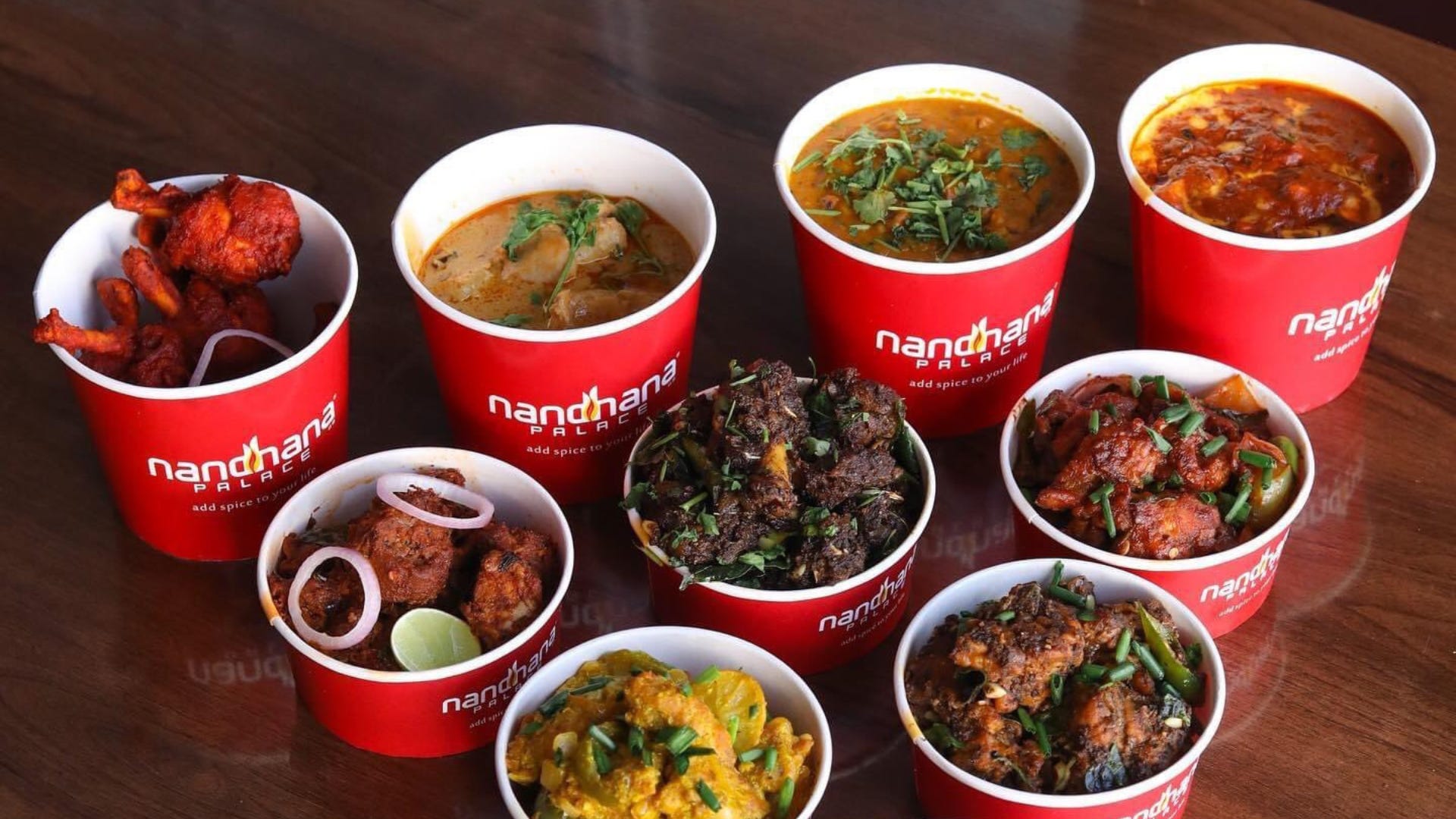
Family-owned, scaled regional businesses are now a recurring theme with large PE firms focused on India. This week we had two such deals — one in healthcare and another in the food and beverages sector
Let’s unpack the deals from the week.
→ Advent’s latest healthcare bet
Yatharth Hospital and Trauma Care Services raised Rs 3,150 crore ($328.5 million) from Advent International, which is picking up a 24.9% stake. The Tyagi family, which founded the Noida-based company in 2008, will remain the largest shareholder.
The publicly traded company operates nine multi-specialty hospitals across North India with about 2,800 operational beds. For Advent, the deal extends an already substantial India healthcare portfolio that includes Apollo 24/7, Cohance, Felix Pharma, Bharat Serums and Vaccines, and Care Hospitals.
Hospitals, clinics and diagnostics, has been a big draw for private equity investors this year. Within hospitals, notable deals include Medicover Hospitals India’s buyout by KKR for about $1.4 billion; LeapFrog Investment’s $40 million investment in Marengo Asia Hospitals last week; IVF hospitals chain Iswarya Fertility Centre, which picked up $37 million from OrbiMed; and multi-specialty hospitals chain KIMS Hospitals in which IFC invested $15.5 million. Manipal Health Enterprises’ successful listing last month added to the momentum.
→ Darwinbox and other AI-themed deals
Human capital management platform Darwinbox received a follow-on investment from Teachers’ Ventures Growth (TVG), the late-stage investment arm of Ontario Teachers’ Pension Plan. Financial terms were not disclosed. The Economic Times, citing unnamed sources, reported the size of the deal at $40 million. TVG first backed Darwinbox in August 2025 with a $40 million investment through primary and secondary transactions. This followed a $140 million round led by Partners Group and KKR in March 2025. The Hyderabad-based unicorn serves over 1,400 enterprises and 4.5 million employees across India, the US, West Asia and Southeast Asia.
Flam closed a $40 million Series B round led by QED Investors. Claypond Capital, former Goldman Sachs partner Martin Chavez, Datadog founder Olivier Pomel, and actor Shahrukh Khan joined the round as new investors. RTP Global and Dovetail were returning investors. The San Francisco-based startup builds three interactive content formats – interactive videos , 3D streaming and conversational on-screen characters. The company’s roster of clients includes Google, State Farm and Diageo. It has teams in India and Japan.
VerifAIX raised $5 million in a seed round led by Endiya Partners and Bluehill VC. The Cupertino-California-based company is building an AI-verification platform for chip design teams. It combines agentic AI with formal verification methods, which the company calls a “formal brain” model. The capital will be used to accelerate product development and expand engineering teams across the US, India and Israel.
→ Restaurants and quick commerce
Nandhana Foods, a Bangalore-based restaurant group focused on southern Indian cuisine, signed an agreement to raise an undisclosed sum from L Catterton. Multiple media reports, citing unnamed sources, put the deal size at $30 million. The company has been operating for over three decades and its restaurants are popular for cuisine from Andhra Pradesh and Karnataka.
The deal marks L Catterton’s second disclosed India restaurant investment after Impresario Entertainment & Hospitality in 2017, which it exited in 2022 through secondary transaction. Globally, the firm has backed around 30 restaurant businesses including Dishoom and PF Chang’s.
There has been a smattering of deals in the restaurants category this year. EverBrands picked up a $15 million cheque from Playbook Partners in February; Artal Asia backed QSR chains Burger Singh ($8.7 million) and Popo Global ($55.6 million); Burma Burma raised $4 million from Negen Capital and Endurance Capital; and Trimex Foods, franchise partner for global brands such as Chili’s, Cinnabon and Paul, raised a $40 million round from Siguler Guff.
Among smaller consumer funding deals, Firi raised a $3 million seed round led by 360 One Asset, with Better Capital and Consumer Collective by Atrium participating. The Gurugram-based startup operates a curated marketplace for beauty and personal care products, using AI to screen product reviews before listing them. It delivers within nine minutes. Kiddo, a quick commerce platform for baby care products, raised $1.3 million in a pre-seed round led by Campus Fund. And Moroccan ingredients-based skincare brand Moromaa raised a $0.1 million seed round from AJVC.
→ Circular economy
JC Global raised $9.5 million from Circulate Capital, marking the Singapore-based circular economy-focused venture capital firm’s eighth investment in India and the first from its Asia Fund II. JC Global processed plastic from difficult-to-recycle streams, primarily automotive components and large appliances, converting it into OEM-grade polymers.
Circulate Capital completed a first close for Fund II at $220 million earlier this year. It aims to raise $300 million, at least half of which will be invested in South Asia, the firm said in a statement. It currently has $480 million in assets under management and counts PepsiCo, Procter & Gamble, Chanel and Danone among its limited partners.
→ Other funding deals
Dheya Engineering Technologies raised Rs 43 crore ($4.5 million) in a pre-Series A round led by Avaana Capital. Unimech Aerospace and Manufacturing participated. The Bangalore-based company builds gas turbine engines for aerial mobility and distributed power generation. Industrial workforce staffing platform Factrika raised $0.9 million from Info Edge in a seed round.
→ Exit files
ChrysCapital sold a little over a 4% stake in Corona Remedies for Rs 509.6 crore ($53 million) through a public market block sale. This was the PE firm’s latest harvest from the Ahmedabad-based pharmaceutical company.
The transaction, executed through affiliate Sepia Investments, takes the firm’s realised value to about Rs 1,1715 crore, a 2.5x return on its Rs 687 crore investment in 2021.
In June this year, it sold a combined 7.5% through affiliates Sepia Investments, Anchor Partners and Sage Investment Trust for about Rs 777 crore. At the IPO in December last year, it had offloaded a 3.87% stake for Rs 428 crore. The firm continues to hold a substantial residual stake in the company.
Submit a deal for the weekly briefing by replying to this email or write to us at hello@therunwaynews.com.
Briefly
Aakrit Vaish-founded AI-focused venture capital firm Activate closed its maiden fund at $105 million, exceeding its original target of about $75 million. The fund was launched in December last year. The fund has already made 10 investments, including Sarvam AI, Mandrake Bio, Wispr, and ElevenLabs.
See you next Saturday.
Thank you for reading The Runway. We’d love to get your feedback. Drop us a line at hello@therunwaynews.com or just reply to this email.